

Sai Gon 27, Jun, 2026. Tires rarely wear randomly. Most steer tire wear patterns are the result of thousands of miles of small influences—including inflation pressure, alignment settings, axle loading, road conditions, and suspension movement—adding up over time. Steer tires often tell you there’s a problem long before a breakdown or roadside inspection does. Uneven shoulder wear, feathering, cupping, and river wear are all signs that something may be wrong with tire inflation, wheel alignment, suspension components, or the steer axle itself.
Because steer tires are constantly managing vehicle direction and carrying heavy front-axle loads, even small mechanical issues can show up in the tread. The problem is that different faults often create similar-looking wear patterns, making diagnosis more complicated than it appears.
In this guide, we’ll explain the most common steer tire wear patterns found on commercial trucks, what causes them, and what maintenance actions can help extend tire life and reduce operating costs.
Why Steer Tires Wear Differently Than Drive Tires
Steer tires operate under a completely different set of forces than drive or trailer tires. While drive tires primarily transmit engine torque and trailer tires simply follow the vehicle, steer tires must continuously support heavy front-axle loads while controlling vehicle direction.
Every steering correction, lane change, road crown, and suspension movement changes how the tread contacts the pavement. As a result, steer tires are usually the first tires to develop visible irregular wear—and often provide the earliest warning of alignment, suspension, or steering problems.
Steering Forces Create Lateral Scrub
Unlike drive tires, steer tires are constantly subjected to lateral scrub as they steer rather than roll perfectly straight. Under normal conditions, this force is distributed evenly across the tread.
When toe settings drift out of specification or steering components develop excessive play, scrub becomes concentrated on specific tread ribs, leading to feather wear, shoulder wear, and other irregular patterns.
In fleet inspections, light feather wear often appears long before drivers notice any steering or handling concerns.
Front Axle Loads Concentrate Stress
Steer tires carry the full weight of the front axle while simultaneously performing steering duties. On many Class 8 trucks, this can mean supporting 12,000–14,600 pounds throughout the tire’s service life.
The combination of heavy vertical loads and constant steering forces makes steer tires especially sensitive to inflation pressure, axle loading, and vehicle setup. Even relatively small deviations can significantly change footprint pressure and accelerate irregular wear.
Alignment Issues Show Up Faster on Steer Tires
Wheel alignment has a greater influence on steer tire life than on any other tire position. Toe, camber, and axle alignment determine whether the tread rolls efficiently or scrubs across the pavement.
Because these forces act directly on the steer axle, alignment-related wear usually appears there long before similar problems become visible on drive or trailer tires. It’s not unusual for a truck to track straight while the tread already shows clear evidence of developing alignment problems.
Suspension Defects Are More Visible on the Steer Axle
Steer tires also respond quickly to worn suspension and steering components. Faulty shocks, kingpins, bushings, wheel bearings, or tie-rod ends allow the tire to bounce or move unpredictably, producing irregular wear such as cupping, scalloping, or localized depressions.
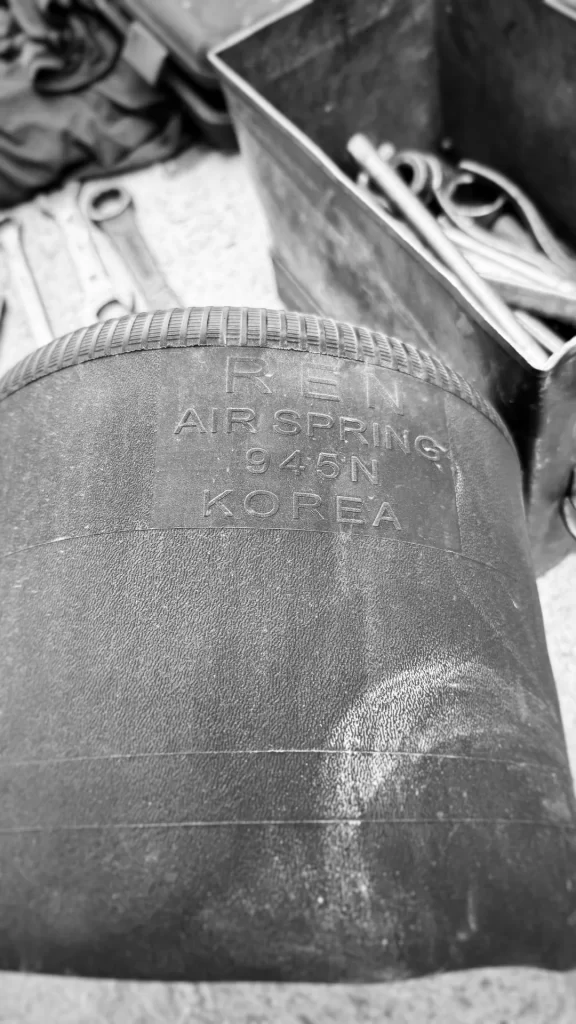
In many cases, the tread records these problems before drivers notice changes in ride quality or steering feel.
Common Steer Tire Wear Patterns and What They Mean
Not all steer tire wear patterns point to the same problem. Some indicate alignment-related issues, while others may suggest inflation errors, suspension wear, or axle-related defects. The challenge is that several different faults can produce similar-looking tread wear, making visual inspection only the first step in the diagnostic process.
The following wear patterns are among the most commonly observed on commercial truck steer tires and often provide valuable clues about a vehicle’s overall mechanical condition.
One-Sided Shoulder Wear
What It Looks Like
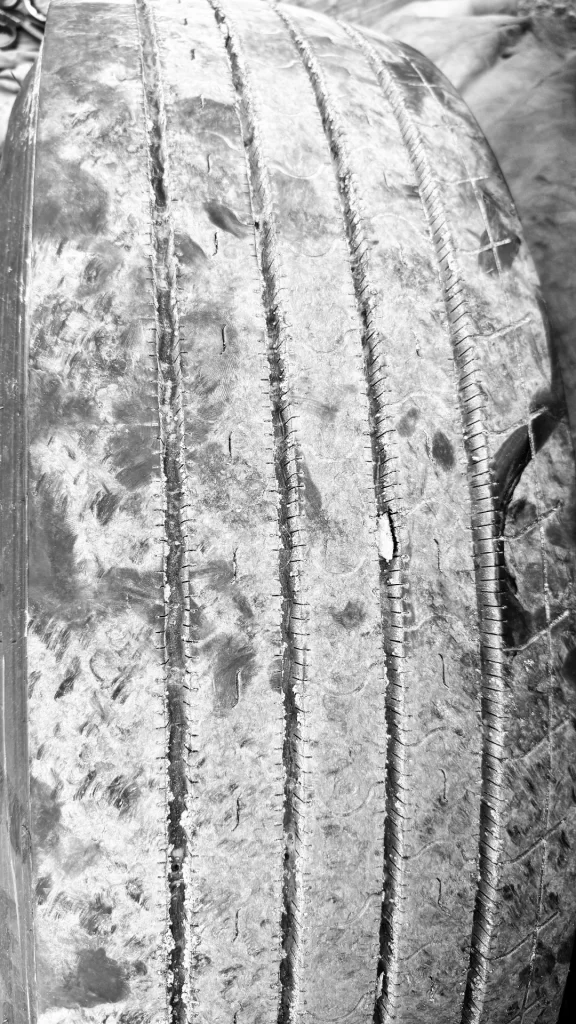
One-sided shoulder wear occurs when either the inner or outer shoulder of a steer tire wears faster than the rest of the tread. The wear may appear on one tire or both and often develops gradually, making it easy to overlook during daily vehicle checks.
Common Causes
Wheel alignment issues, particularly excessive camber or incorrect toe settings, are among the most common causes of shoulder wear. However, worn kingpins, suspension defects, steering component wear, and axle-related issues can create similar patterns. In some cases, long-term operation on heavily crowned roads may also contribute to uneven shoulder wear.
Because multiple faults can produce the same appearance, shoulder wear should be treated as a symptom rather than a diagnosis.
Field Observation
In fleet service, it’s not unusual to find noticeable shoulder wear on a truck that still tracks straight and shows no obvious handling concerns. The tread often reveals developing alignment or suspension issues long before drivers notice them.
What to check
– Measure tread depth across the full width of both steer tires.
– Verify toe, camber, and overall steer axle alignment.
– Compare the wear pattern on both steer tires for symmetry.
– Inspect kingpins, bushings, tie-rod ends, wheel bearings, and suspension components for excessive wear.
– Review recent alignment or suspension repairs that may have influenced the wear pattern.
Both-Side Shoulder Wear
Most tire manufacturers identify underinflation as the primary cause of both-shoulder wear. In theory, low inflation increases sidewall deflection and shifts more load onto the shoulders.
However, steer tires do not always follow textbook wear patterns. In real-world fleet operations, chronic underinflation on the steer axle is relatively uncommon because these tires are typically maintained at relatively high inflation levels because fleets have little tolerance for steer-axle tire failures or handling issues.
On steer tires, lateral scrub forces often play a much larger role. As inflation pressure increases, the tread profile becomes more crowned, creating a larger effective rolling radius at the center of the tread than at the shoulders. During cornering, the shoulder ribs are forced to slip relative to the center ribs because they cannot follow the same rolling path. The greater the difference in rolling radius, the greater the shoulder scrub—and the faster shoulder wear can develop.
Field Observation
Many technicians immediately associate both-shoulder wear with underinflation. While that explanation is widely accepted, steer tire wear is often influenced by factors that do not affect drive tires to the same extent. Understanding how steering forces interact with tread geometry is often just as important as checking inflation pressure. On a steer axle, the tread is not only carrying load—it’s constantly managing direction.
What to Check
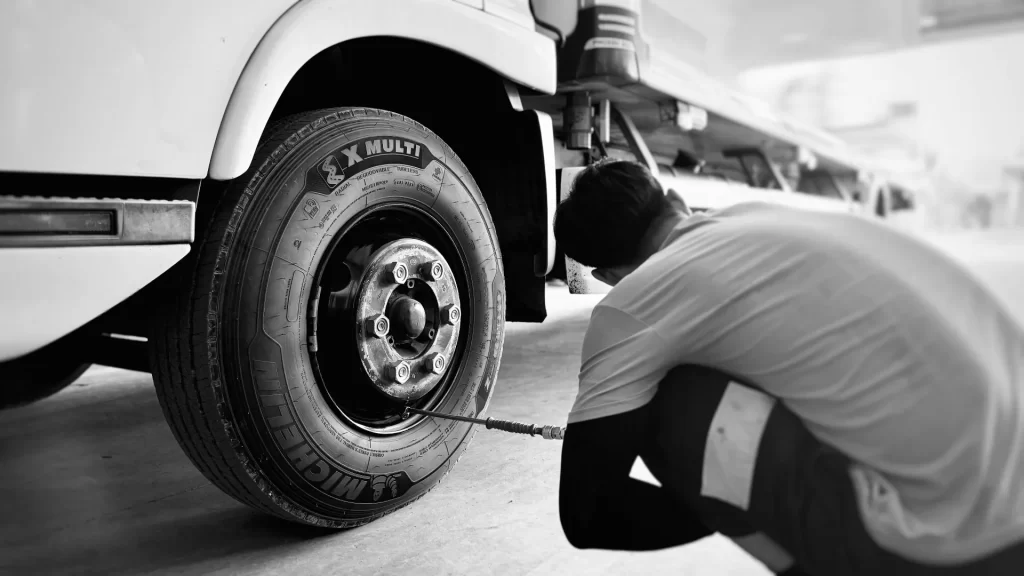
– Verify cold inflation pressure.
– Compare tire pressure with actual axle loads.
– Inspect tread depth across the tire width.
– Review vehicle operating conditions and route characteristics.
Feather Wear
What It Looks Like
Feather wear is characterized by tread ribs that feel smooth when rubbed in one direction but sharp or rough in the opposite direction. The pattern usually develops across multiple ribs rather than a single shoulder and is often easier to detect by touch than by sight.
Common Causes
Feather wear is most commonly caused by incorrect toe settings. When the steer tires are no longer rolling parallel to the direction of travel, the tread is forced to scrub sideways across the pavement, gradually creating a feathered edge.
Although toe error is the primary cause, worn tie-rod ends, kingpins, steering linkage, excessive steering play, or an incorrect drive axle thrust angle can all alter the tire’s tracking path and produce the same wear pattern.
Field Observation
Feather wear is one of the earliest warning signs of a wheel alignment problem. Experienced technicians rarely wait until it becomes visible. Instead, they detect it by running a hand across the tread during routine inspections, often long before drivers notice a steering pull or handling issue.
A common rule in many alignment shops is simple:
If you can feel feather wear, schedule an alignment. If you can already see it, valuable tire life has probably already been lost.
In practice, visible feather wear often indicates that total toe error has progressed well beyond a minor adjustment. By the time the pattern is obvious to the eye, total toe deviation is frequently greater than 4 mm (0.16 in), meaning the tire has already experienced substantial lateral scrub over thousands of miles.
Visible feather wear should be considered a late-stage warning rather than an early symptom. Once the feathering can be seen without touching the tread, total toe error has often exceeded 4 mm (0.16 in). Based on Michelin’s published relationship between toe deviation and tread wear, this level of misalignment may already have shortened steer tire life by roughly 28% and increased fuel consumption by about 2.8% due to higher rolling resistance. An alignment performed at this point can stop further tread loss, but it cannot restore the rubber that has already been scrubbed away.
What to Check
– Run your hand across the tread from the outside shoulder toward the inside shoulder, then reverse the direction.
– If the tread feels smooth when moving inward and rough when moving outward, it typically indicates toe-in. If it feels smooth outward and rough inward, it typically indicates toe-out.
– Compare both steer tires. If one tire shows a toe-in pattern while the other shows toe-out, inspect the drive axle alignment before adjusting toe. A drive axle that is not parallel with the steer axle can create a thrust-angle condition that produces opposite feather wear on the steer tires.
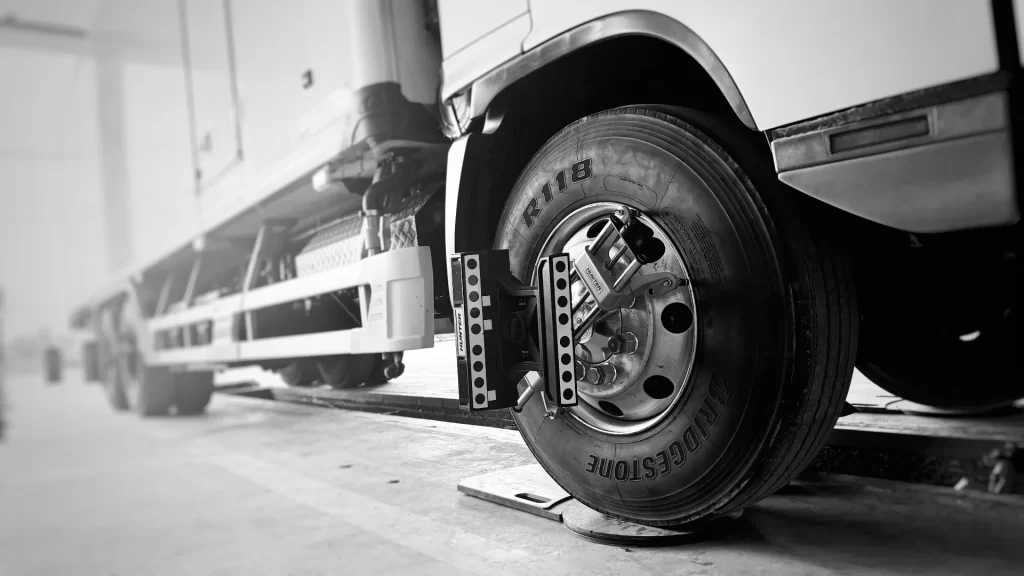
– Measure total toe using a calibrated wheel alignment system rather than relying solely on visual inspection.
– Inspect tie-rod ends, drag links, kingpins, steering linkage, and other front-end components for excessive wear.
Shoulder Step Wear
What It Looks Like
Shoulder step wear appears as a series of uneven tread blocks along the outer shoulder of the tire. Instead of wearing evenly across the rib, each tread block develops a distinct high and low edge, creating a staircase-like profile when viewed from the side or felt by hand.
Unlike feather wear, the wear is confined to individual tread blocks rather than extending continuously across the tread ribs.
Common Causes
Shoulder step wear develops when the outer shoulder blocks experience repeated lateral scrub as they enter and leave the contact patch. Steering corrections, road crown, long highway operation, and tread block flexibility all contribute to the pattern.
Compared with drive tires, steer tires are more susceptible because the outer shoulder continuously absorbs lateral forces during cornering. Once small differences develop between adjacent tread blocks, uneven loading tends to reinforce the pattern over time.
Field Observation
Shoulder step wear usually develops gradually rather than appearing suddenly. It is often seen on steer tires that spend most of their service life on highways with consistent road crown or repetitive routes.
Some modern steer tire designs appear to reduce shoulder step wear through reinforced shoulder ribs and optimized tread geometry. While this improves shoulder stability, many technicians have observed that irregular wear may become more concentrated in the adjacent ribs instead. Whether this contributes to the increasing occurrence of river wear remains an open question and deserves further field investigation.
What to Check
– Compare the wear pattern on both steer tires.
– Verify toe settings and overall wheel alignment.
– Inspect shocks, kingpins, bushings, and steering components.
– Review typical operating routes, especially long-distance highway service.
– Compare the wear pattern with river wear to avoid misdiagnosis.
Depression Wear
What It Looks Like
Depression wear appears as a localized worn section along the shoulder rib, affecting only part of the tire’s circumference. Unlike river wear or shoulder step wear, the pattern does not continue around the entire tire. Instead, one section of the shoulder becomes noticeably lower while the surrounding tread remains relatively uniform.
The first step in diagnosis is determining whether the depression originated during tire mounting, developed from wheel vibration, or resulted from an underlying mechanical problem.
If the Tire Was Improperly Mounted
A localized shoulder depression accompanied by two V-shaped wear marks is often worth investigating as a possible mounting-related issue. Unlike alignment wear, which typically develops around the entire circumference, this pattern remains confined to one section of the tire.
One field observation is that the affected area often corresponds to the section of the tire that was positioned at the bottom during inflation. Some technicians believe the weight of the wheel assembly may make it more difficult for the bead to seat uniformly if proper mounting procedures are not followed. If a small amount of radial runout remains after installation, that section of the tread may carry load differently over thousands of miles, eventually creating a localized depression.
While this relationship has not been widely documented, it is a practical inspection point whenever localized depression wear appears shortly after a tire has been mounted.
What to check
– Look for two V-shaped wear marks within the depressed area.
– Inspect the bead seating indicator line around the entire rim.
– Measure radial runout of the tire and wheel assembly.
– Check whether the tire was recently mounted or demounted.
– Inspect the rim for damage, corrosion, or bead-seat contamination.
If Wheel Assembly Imbalance Is the Problem
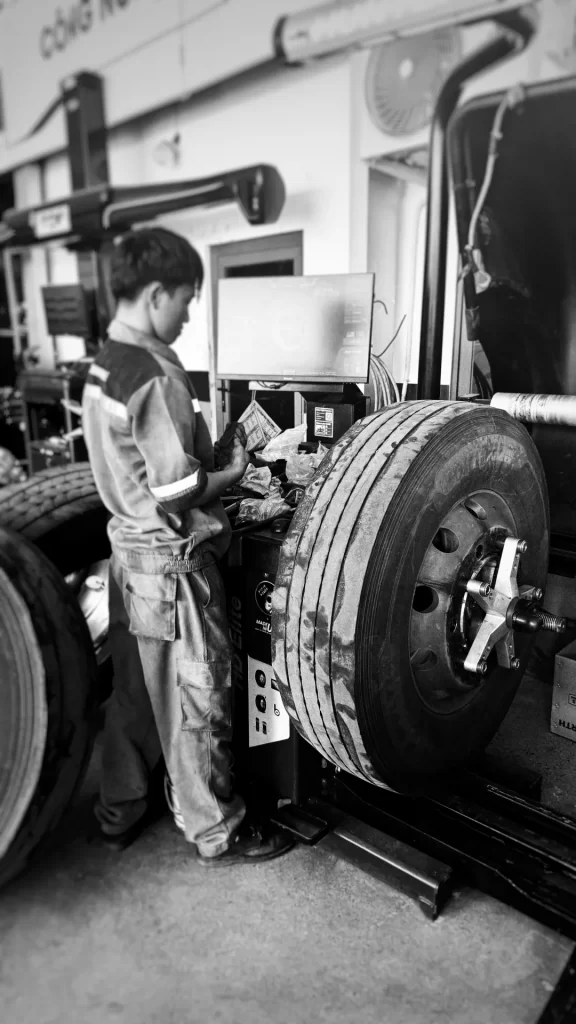
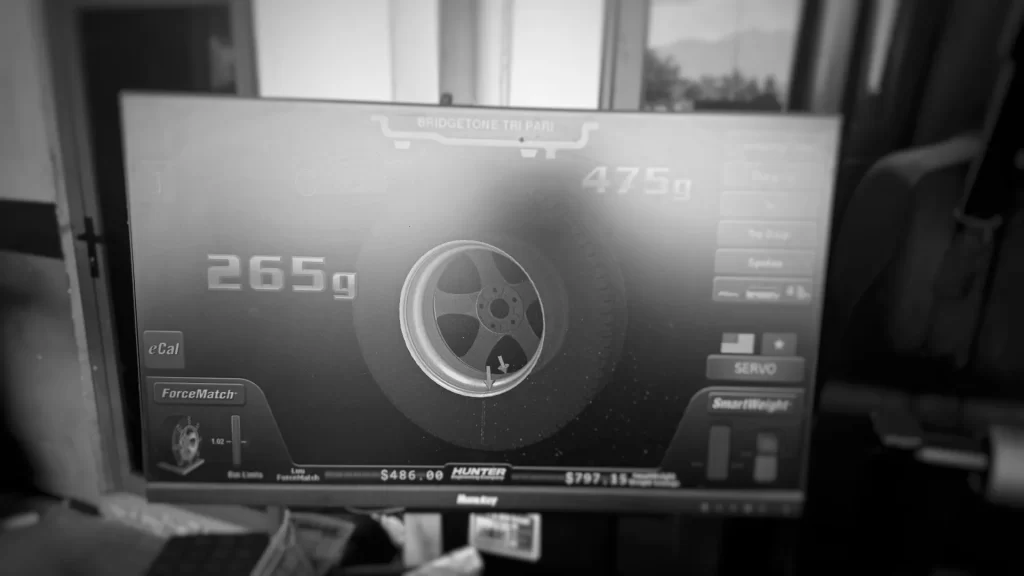
A localized shoulder depression accompanied by steering wheel vibration may indicate that the tire and wheel assembly is not rotating uniformly. The condition may result from wheel imbalance, tire non-uniformity, or the combined effect of how the tire was mounted on the wheel.
One of the most recognizable symptoms is vibration that becomes noticeable within a specific speed range—typically around 50 mph (80 km/h). Many drivers describe the steering wheel as shaking at highway speeds while the vibration becomes less noticeable above or below that range.
As the assembly rotates, the heavier section repeatedly generates higher dynamic loads. Over thousands of miles, this cyclic loading can contribute to localized shoulder depression, particularly when the condition remains uncorrected.
What to check
– Perform dynamic wheel balancing.
– Inspect for missing or loose wheel weights.
– Measure radial and lateral runout.
– Check tire uniformity if balancing does not eliminate the vibration.
– Ask the driver whether the vibration consistently occurs within a specific speed range.
If the Cause Is Mechanical
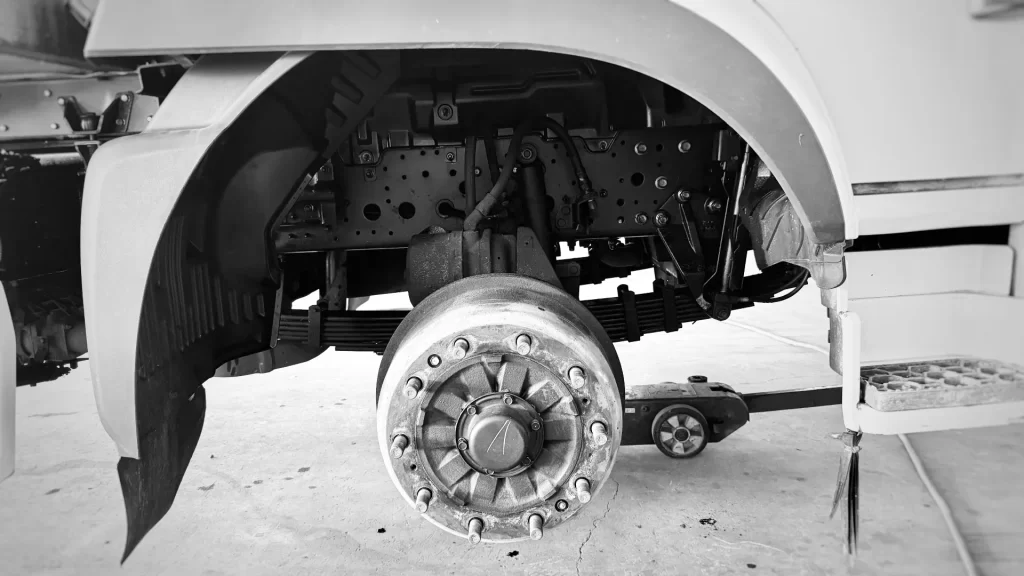
Mechanical defects usually develop gradually as suspension or steering components lose their ability to keep the tire firmly planted on the road. Unlike mounting-related issues, the wear often becomes more pronounced over time and may appear alongside other irregular wear patterns such as cupping or feathering.
In many cases, the tire is not the first component to show symptoms. Drivers may notice clunks over bumps, knocking noises while turning, steering looseness, or front-end vibration long before the wear pattern becomes obvious. Rather than creating the wear directly, these mechanical faults allow the tire to repeatedly lose and regain stable contact with the road, gradually producing localized shoulder depression.
One practical rule is that tires rarely create the noise themselves. Instead, the tread often records movement that has already become audible somewhere in the steering or suspension system. When unusual noises and localized depression wear appear together, they should be treated as two symptoms of the same underlying problem rather than unrelated issues.
What to Check
– Shock absorber condition.
– Wheel bearing end play.
– Kingpins and bushings.
– Tie-rod ends and steering linkage.
– Suspension components.
– Driver reports of clunking, knocking, steering looseness, or speed-related vibration.
River Wear
What It Looks Like
River wear appears as a narrow channel of accelerated wear running circumferentially along one of the outer tread ribs. Unlike shoulder step wear, the tread edge remains relatively intact while the adjacent rib gradually wears away, creating a shallow groove that resembles the path of a river.
The pattern develops slowly and is often difficult to detect during routine inspections until the groove becomes pronounced.
Why Is River Wear Sometimes Called “Slow Wear”?
Although “slow wear” is not an official tire industry term, some fleet technicians use it informally to describe river wear because of how gradually the pattern develops.
Unlike feather wear, shoulder wear, or cupping, which can rapidly shorten tire life, river wear often progresses over a much longer period. It is not unusual to inspect a steer tire with visible river wear and discover that it has already accumulated 40,000 to 60,000 miles (65,000 to 100,000 km)—or even more—while still retaining substantial usable tread depth.
Its appearance may look severe, but river wear does not always indicate rapid tread loss. Instead, it reflects a gradual change in how specific tread ribs contact the road over tens of thousands of miles. Rather than wearing the tire out quickly, river wear often changes where the tread wears instead of how fast it wears.
Why River Wear Is Different
Unlike feather wear or shoulder wear, river wear rarely points to a single mechanical fault. Two trucks operating with similar alignment settings, inflation pressures, and service conditions can develop completely different wear patterns—one may show shoulder step wear, while another develops river wear.
This suggests that river wear is influenced by more than vehicle setup alone. Tread design, shoulder stiffness, footprint pressure, and operating conditions all appear to affect how the pattern develops.
Field Observations
Across different steer tire designs, river wear does not develop equally.
One field observation is that tires with a more squared outer shoulder appear more susceptible to river wear, while tires with a more rounded shoulder profile more frequently develop shoulder step wear instead.
Another observation is that tires with a wider contact footprint also seem more likely to develop river wear, possibly because a larger shoulder contact area increases localized scrub during steering.
River wear is also overwhelmingly a steer-axle phenomenon. Although similar irregular wear may occasionally appear in other tire positions, true river wear is rarely observed on drive tires, where continuous driving torque and higher vertical loads produce very different tread stress distributions.
In fleet service, river wear also appears to be more common on coaches than on heavy trucks operating with consistently high steer axle loads. While this relationship has not been validated through controlled testing, it suggests that lighter axle loads may allow tread design and contact-pressure distribution to influence wear more than on heavily loaded steer tires.
These observations are based on field experience rather than controlled testing, but they suggest that tread geometry, axle loading, and vehicle application may play a larger role than is commonly recognized.
A Question Worth Asking
Rather than asking why one tire develops river wear, it may be more useful to ask why another tire operating under the same conditions does not.
Modern steer tires continue to evolve with stiffer shoulder ribs, wider footprints, and more stable tread blocks to improve handling and reduce edge wear. An interesting question is whether some of these design changes have also altered shoulder contact pressure, making certain tread patterns more susceptible to river wear.
Perhaps the more important question is not what causes river wear, but why some tread designs consistently resist it.
What to Check
– Verify steer axle alignment.
– Confirm inflation pressure is appropriate for the actual axle load.
– Inspect suspension and steering components.
– Compare both steer tires for symmetry.
– Review the tire model and tread design if river wear repeatedly develops under similar operating conditions.
River wear remains one of the least understood irregular wear patterns in commercial trucking. While alignment and inflation should always be verified, field experience suggests that tread design deserves far more attention than it currently receives. When two trucks operate under nearly identical conditions but consistently produce different wear patterns, the tire itself may be telling us something that routine maintenance checks cannot.
What Should You Do After Identifying Steer Tire Wear?
Steer tire wear should never be treated as a replacement decision based solely on appearance. Before removing a tire from service, fleet technicians should determine whether the wear is stable, whether the underlying cause has been corrected, and whether the tire can continue operating safely in another position.
In many cases, replacing a steer tire immediately is not the most economical solution. If the casing remains sound and the irregular wear has been stabilized, rotating the tire to a drive or trailer position may recover thousands of additional service miles. On the other hand, continuing to operate a tire with an unresolved mechanical problem will simply transfer the wear pattern to the replacement tire.
The goal is not only to replace worn tires—it is to eliminate the condition that created the wear in the first place.
Step 1 — Correct the Root Cause First
Before making any decision about rotation or replacement, identify and correct the mechanical issue responsible for the wear.
Typical examples include:
– Incorrect toe or thrust angle
– Suspension or steering wear
– Improper inflation pressure
– Wheel imbalance
– Ride-height problems
– Axle loading issues
Installing a new tire before correcting these conditions usually results in the same wear pattern returning within a relatively short period.
Step 2 — Decide Whether the Tire Can Remain in Service
Once the root cause has been corrected, evaluate the tire itself. Consider:
– Remaining tread depth
– Casing condition
– Belt integrity
– Uniformity of the wear pattern
– Signs of abnormal heat or structural damage
– Vehicle operating requirements
A tire with irregular wear is not automatically an unsafe tire. Many patterns—particularly river wear or mild feather wear—can continue providing useful service if the wear has stabilized and the tire remains structurally sound.
Step 3 — Should You Rotate the Tire?
Rotation is often the most cost-effective option, but it is not appropriate for every wear pattern.
| Wear Pattern | Continue on Steer | Rotate | Replace |
|---|---|---|---|
| Mild Feather Wear | ✓ After alignment | Often | Rarely |
| One-Shoulder Wear | Depends on severity | Often | If severe |
| Both-Shoulder Wear | Sometimes | Often | Rarely |
| Shoulder Step Wear | Sometimes | Often | If advanced |
| River Wear | Usually | Optional | Rarely |
| Localized Depression Wear | No, until diagnosed | Not recommended | Depends on the cause |
The decision should always consider fleet policy, retread plans, remaining tread depth, and the tire manufacturer’s recommendations.
Step 4 — Monitor the Tire After Repair
Correcting the mechanical problem does not guarantee that the wear pattern will immediately stop progressing.
After alignment, suspension repair, or tire rotation:
– Measure tread depth across the tire.
– Record the mileage.
– Reinspect after approximately 12,000–15,000 miles (20,000–25,000 km).
– Confirm that the wear rate has stabilized before returning the tire to a normal inspection interval.
Trend monitoring is often more valuable than a single inspection because it confirms whether the corrective action actually worked.
Fleet Perspective
Experienced fleets rarely judge a tire by its wear pattern alone.
Instead, they ask three questions:
- What caused the wear?
- Has the root cause been corrected?
- Can this tire safely generate additional service miles?
Those three questions usually have a greater impact on tire cost per mile than deciding whether to replace the tire immediately.
Final Thought
Irregular wear should not be viewed as the end of a tire’s life. More often, it is the tire’s way of recording how the vehicle has been operating. Every wear pattern tells a story about alignment, suspension, loading, inflation, or driving conditions. Learning to read that story—and correcting the underlying cause before installing another tire—is what separates routine tire replacement from effective fleet tire management.
Frequently Asked Questions
The most common steer tire wear patterns include feather wear, one-sided shoulder wear, both-shoulder wear, shoulder step wear, depression wear, and river wear. Each pattern points to different operating conditions or mechanical issues. For example, feather wear is commonly associated with incorrect toe settings, while shoulder wear often relates to alignment, inflation, or suspension problems. River wear is more complex because it may also be influenced by tread design and vehicle application.
Yes—provided the tire is still structurally sound.
The first priority is to correct the underlying cause, such as improper alignment, suspension wear, incorrect inflation, or wheel imbalance. Once the problem has been repaired, many tires with mild feather wear, shoulder wear, or river wear can continue operating safely or be rotated to another axle position according to the fleet’s maintenance policy and the tire manufacturer’s recommendations.
Replacing the tire without correcting the root cause usually results in the same wear pattern appearing again.
Rotation may be appropriate when:
The casing remains structurally sound.
There is sufficient remaining tread depth.
The irregular wear has stabilized after the mechanical problem has been corrected.
The tire complies with the fleet’s safety policy and the manufacturer’s recommendations.
Many fleets rotate mildly irregular steer tires to drive or trailer positions to maximize tire life, while severe shoulder wear, deep localized damage, or structural defects generally require tire replacement.
River wear does not usually result from a single defect.
It appears to develop from a combination of factors, including steer axle alignment, tread design, shoulder stiffness, footprint pressure, road conditions, and operating environment. Field observations also suggest that river wear is seen more frequently on steer tires than drive tires and may occur more often on coaches than on heavily loaded trucks.
Although alignment and inflation should always be checked first, tire design may play a larger role than many technicians realize.
Feather wear is usually detected by touch before it can be seen.
Run your hand across the tread ribs in both directions. If the tread feels smooth in one direction and sharp in the other, feather wear has already begun. This often indicates excessive toe error or a thrust-angle problem.
Many alignment technicians follow a simple rule: “If you can feel feather wear, schedule an alignment. If you can already see feather wear, valuable tire life has likely been lost.“
“Every irregular wear pattern is a message. The sooner you read it, the less you’ll pay for ignoring it.“
Nhat Diem Honq

