

Sai Gon, 10 May 2026. Low profile truck tires are becoming more common in Vietnam’s long-haul and passenger transport sectors as fleets pursue better fuel efficiency, highway stability, and modern tubeless radial designs. As Vietnam’s expressway network expands toward roughly 3,800 km in 2026 and targets nearly 5,000 km by 2030, the operating environment is gradually becoming more favorable for highway-oriented tire platforms. The real challenge, however, is not highway performance itself, but how these tires handle Vietnam’s mixed-road operating conditions over the long term.
Although Vietnam’s expressway network continues expanding toward 2030, much of the country’s commercial transport still operates on uneven provincial roads, industrial corridors, urban streets, and overloaded freight routes. In these conditions, low profile tires face greater exposure to impact stress, harsher ride quality, and casing damage than traditional high-profile configurations.
At the same time, vehicle manufacturers are steadily moving away from older tube-type platforms. Hino Motors has shifted many newer highway-focused models from 11.00R20 to 11R22.5 setups, while newer models from VinFast and Kim Long Motor are increasingly adopting 215/75R17.5 and 275/70R22.5 low profile tires for modern passenger fleets. Isuzu Motors has also moved from 8.25R16 to 9.5R17.5 tire sizes on selected models to improve highway efficiency and load capacity.
Fleet opinions remain divided. Some fleets see low profile tires as the future of highway transport, while others view them as poorly suited to Vietnam’s real-world operating conditions. The industry debate is shifting from performance advantages to long-term operational survivability. Factors such as tire management practices, vehicle specifications, replacement tire availability, and fleet owners’ technical understanding may ultimately shape the pace of low profile tire adoption across Vietnam.
What Are Low Profile Truck Tires?
Commercial truck tires have gradually evolved from traditional tube-type and high-profile bias designs toward tubeless radial platforms with larger rim diameters and shorter sidewalls, particularly in highway-focused transport markets where fuel efficiency and high-speed stability have become increasingly important.
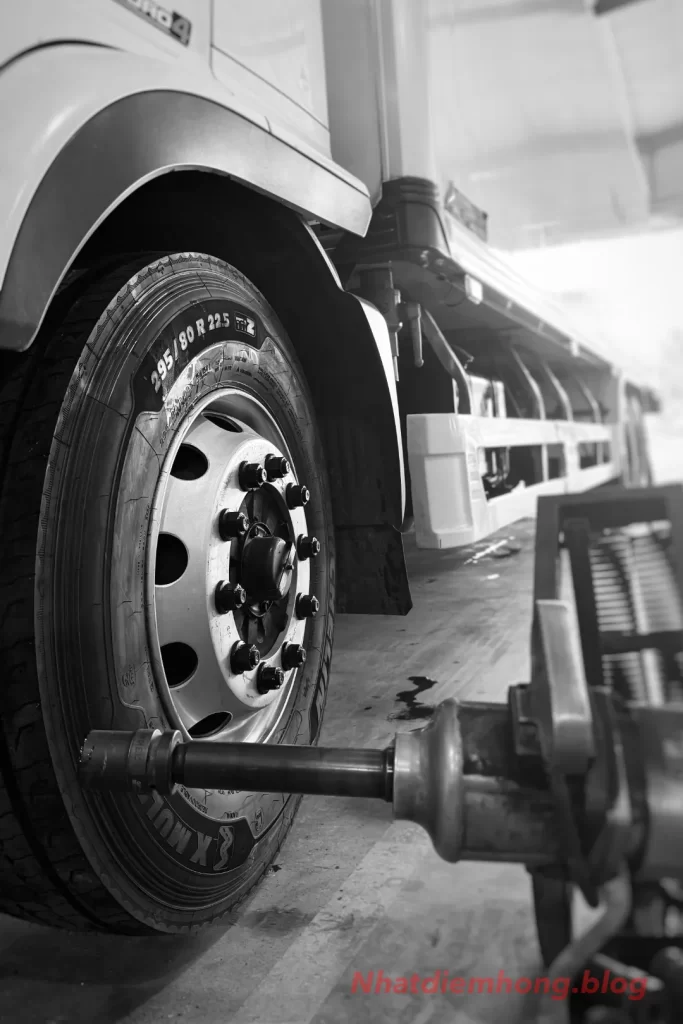
A low profile truck tire uses a shorter sidewall relative to its tread width and rim diameter. This design typically creates a wider tread footprint, reduces sidewall flex, and improves highway handling during long-distance operation. Common low profile sizes include 315/70R22.5 and 275/70R22.5, while higher-profile sizes such as 11.00R20, 12R22.5, and 295/80R22.5 remain widely used across Vietnam.
While low profile truck tires can improve highway efficiency and vehicle stability, the shorter sidewall design also reduces the tire’s ability to absorb road impacts under harsh operating conditions.
The Shift From Tube-Type to Low Profile Truck Tire Sizes
Across commercial transport markets, truck tire sizes have gradually evolved from traditional tube-type high-profile designs toward tubeless radial and low profile configurations as fleets prioritize highway efficiency, stability, and higher-speed operation.
Beyond tire size itself, the transition from tube-type to low profile truck tires also reflects broader changes in load capacity, highway speed capability, and vehicle operating platforms.
| Category | 100 Series (Tube-Type / Flat Rim) | 90 Series (Tubeless Radial) | Low Profile Series (≤80) |
|---|---|---|---|
| Typical Size | 11.00R20 | 12R22.5 | 295/80R22.5 |
| Load Index | 150/146 | 152/149 | 152/149 |
| Speed Symbol | K | L | M |
| Max Speed Rating | 110 km/h | 120 km/h | 130 km/h |
| Typical Platform | Older trucks & buses | Modern heavy-duty trucks | Highway coaches & premium fleets |
Table: Common Truck Tire Size Transitions From Tube-Type to Low Profile Configurations
| 100 Series (Tube-Type / Flat Rim) | 90 Series (Tubeless Radial) | Low Profile Series (≤80) |
|---|---|---|
| 7.50R15 | — | 215/75R17.5 |
| 7.00R16 | 8R17.5 | 205/75R17.5 |
| 7.50R16 | 8.5R17.5 | 215/75R17.5 |
| 8.25R16 | 9.5R17.5 | 235/75R17.5 |
| 9.00R20 | 10R22.5 | 255/70R22.5 / 275/70R22.5 |
| 10.00R20 | 11R22.5 | 275/80R22.5 |
| 11.00R20 | 12R22.5 | 295/80R22.5 / 305/70R22.5 |
| 12.00R20 | 13R22.5 | 315/70R22.5 / 315/80R22.5 |
| 12.00R20 | 13R22.5 | 385/65R22.5 / 385/55R22.5 |
Despite differences in vehicle class and tire size, most transitions toward low profile truck tires follow similar engineering priorities: improved highway stability, reduced sidewall flex, and better fuel efficiency. The trade-off, however, is often reduced impact absorption under harsh road conditions.
Fleet operators should consult experienced tire specialists before converting to low profile configurations. Wider tire widths can significantly reduce dual-wheel clearance, while wheel conversion compatibility and hub specifications must also be carefully matched.
Changes in overall tire diameter may affect cruising RPM, drivetrain behavior, fuel consumption, and highway operating efficiency. In many markets, tire and wheel conversions may also require approval from regulatory authorities or vehicle inspection agencies to ensure legal compliance and operational safety.
Fleet operators should verify tire diameter and rolling circumference before converting to new tire sizes. In most commercial applications, diameter variation is typically kept within ±3% to avoid affecting speed accuracy, fuel efficiency, transmission behavior, and drivetrain reliability. Larger changes may require recalibration or gear-ratio adjustments, making consultation with tire specialists or vehicle OEMs strongly recommended.
Tire Size Conversion: Overall Diameter Comparison (8.25R16 Series)
| Size | Overall Diameter (mm) | Difference (%) |
|---|---|---|
| 8.25R16 | 860 | — (Baseline) |
| 225/90R17.5 | 865 | +0.6% |
| 9.5R17.5 | 843 | -2.0% |
Note: All three sizes shown above stay comfortably within the industry-recommended ±3% overall diameter tolerance. Keeping changes within this range helps maintain accurate speedometer readings, optimal fuel efficiency, and minimizes stress on the transmission and drivetrain.
The Shift from Tube-Type to Tubeless Tires
The transition from traditional tube-type truck tires to tubeless radial designs was driven mainly by durability, heat dissipation, and maintenance efficiency. By eliminating inner tubes, tubeless tires reduced heat buildup, improved puncture resistance, and simplified roadside servicing compared to older multi-piece tube-type systems.
For commercial fleets, tubeless radial tires also delivered longer tread life, better fuel efficiency, improved resistance to irregular tread wear under inconsistent tire inflation conditions, higher load capability, and more stable high-speed performance.
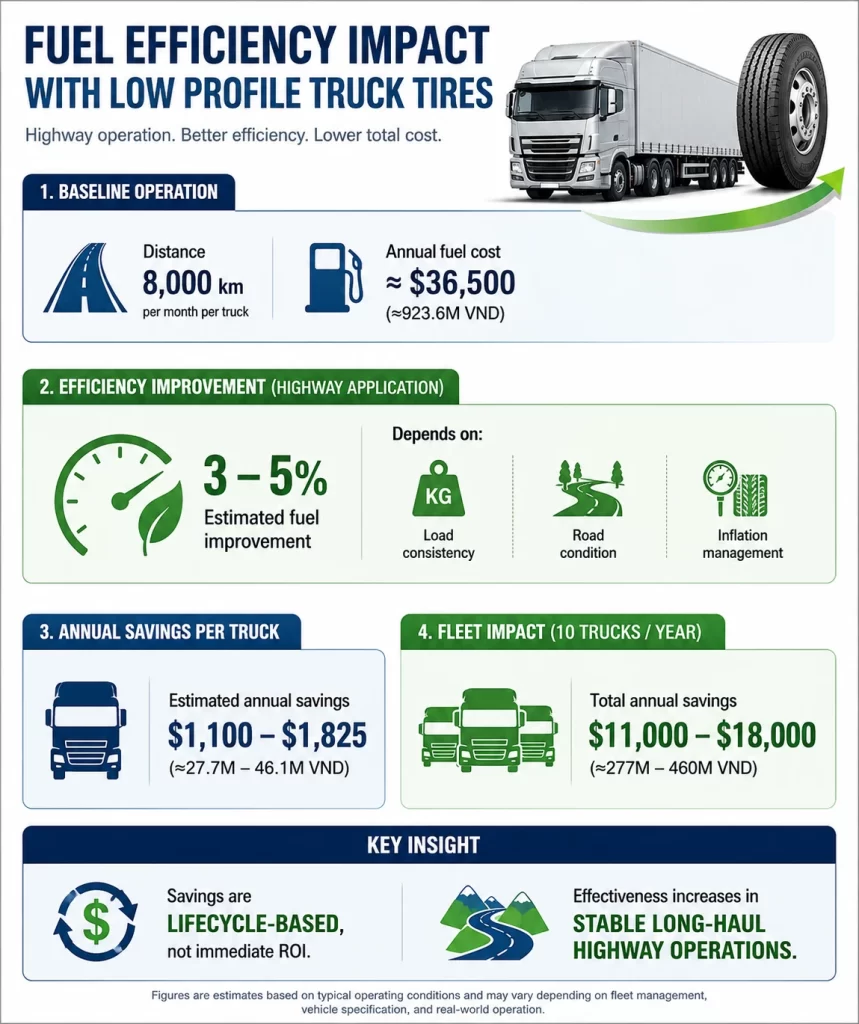
Under long-haul operating conditions, some fleets may achieve fuel savings of roughly 3–5% and tire life improvements of up to 20% compared to older tube-type commercial tire platforms.
One of the biggest advantages of tubeless truck tires is reduced downtime. Faster repairs, simpler replacement procedures, and lower maintenance demands can significantly reduce service interruptions, which becomes increasingly important as fleets expand. More reliable vehicle uptime also helps fleets maintain delivery consistency, strengthen brand reliability, and reduce daily management pressure — giving fleet owners more time for rest, family, and long-term business growth.
Field Experience From Vietnam Fleets
After more than two years supporting several fleet conversions from tube-type to tubeless radial tires in Vietnam, the operational results have generally been positive, including on heavily overloaded routes.
Many fleets previously relied on thicker rims and high-PR tube-type tires for added load protection. In practice, however, rim damage often became a major source of tire-related failures and maintenance costs.
Following the transition, some fleets reported substantial reductions in rim-related damage, irregular tread wear, and roadside tire incidents, while tubeless servicing also helped shorten repair and replacement time significantly.
The experience suggests that, under the right operating and maintenance conditions, tubeless radial platforms may offer greater long-term operational stability than many fleets initially expected.
The Move from Standard Radial to Low Profile Tires
As highway transport and fuel-efficiency demands increased, fleets gradually adopted lower-profile tire configurations with shorter sidewalls and wider tread footprints.
Compared to standard high-profile radial tires, low profile truck tires generally provide lower rolling resistance, improved steering response, reduced vehicle sway, and more stable highway handling during high-speed operation.
Their shorter sidewall design also reduces casing flex and heat generation, helping improve fuel efficiency and long-distance highway performance under stable operating conditions.
However, these advantages are often more noticeable on consistent highway routes than in mixed-road environments with frequent impacts, overload conditions, or uneven pavement quality.
Transitioning from 11.00R20 tube-type assemblies to 12R22.5 or 295/80R22.5 tubeless radial configurations can also reduce overall wheel-end weight. Depending on wheel specification, total vehicle weight savings on an 11-wheel truck or coach may exceed 300 kg, helping improve fuel efficiency, increase payload capacity, and optimize long-distance operating efficiency.
Although vehicle manufacturers have gradually adopted low profile tire configurations on newer highway-oriented platforms, much of the early industry push came from major tire manufacturers rather than truck OEMs themselves. Companies such as Michelin, Bridgestone, Goodyear, and Sailun Tires promoted low profile truck tires through fuel-efficiency programs, retread systems, and highway-focused fleet solutions designed to reduce operating costs.
In mature highway markets, low profile truck tires have become part of broader fleet-efficiency strategies. In Vietnam, however, adoption speed still depends heavily on road conditions, fleet management standards, and real-world operating practices.
Challenges of Low Profile Truck Tires in Vietnam
Despite rising interest, low profile truck tires are not a straightforward upgrade in Vietnam. Their long-term effectiveness depends on operating conditions, maintenance capability, service network readiness, and transport infrastructure—not just highway performance.
Fleet Operating Factors
In Vietnam, adoption is driven as much by fleet management practices as by tire technology.
Many passenger transport fleets running OE sizes like 295/80R22.5 later revert to 12R22.5 for simplicity. A unified tire size across mixed fleets reduces inventory complexity, eases rotation, casing control, and speeds up roadside replacement.
Long-established fleets also tend to stick with familiar high-profile platforms. Decades of operational experience reinforce confidence in proven setups, while limited awareness of long-term efficiency gains and conservative management habits slow adoption of low profile alternatives.
Dealer and Service Network Readiness
Although manufacturers promote low profile truck tires, local dealer networks often prioritize short-term commercial efficiency over technology transition.
Dealers tend to stock widely used sizes that turn over quickly and fit existing fleet demand. As a result, fleets are often steered toward familiar high-profile options through pricing support, credit terms, or service incentives.
Availability of low profile truck tires also remains uneven, especially outside major transport corridors. The segment is still largely dominated by premium brands, with limited mid-range alternatives for cost-sensitive fleets.
In addition, some dealers still lack full confidence or technical familiarity with low profile applications, which limits their willingness to actively recommend them.
Market and Infrastructure Conditions
Vietnam’s expanding North–South Expressway network is improving long-haul efficiency and gradually creating a more suitable environment for low profile truck tires.
In stable highway conditions, low profile designs can reduce rolling resistance and improve aerodynamic efficiency. Wider tread contact and shorter sidewalls enhance high-speed stability and vehicle balance.
These factors can contribute to lower fuel consumption, improved safety, and stronger alignment with fleet efficiency and ESG objectives on long-distance routes.
However, regulatory and inspection considerations, including vehicle registration and periodic inspection standards, may still favor conventional tire configurations in some cases. This can create additional hesitation for fleets when adopting non-standard or less familiar low profile sizes, even if operational benefits are evident.
Vietnam’s Truck Tire Transition in 2026: From Tube-Type to Tubeless and Beyond
As of 2026, Vietnam’s commercial vehicle industry is entering another transition phase in OEM tire specification strategy, increasingly driven by platform decisions from truck and coach manufacturers rather than aftermarket replacement trends.
In the truck segment, the transition remains relatively conservative. Most OEMs are still moving from traditional tube-type fitments toward tubeless radial platforms, including shifts from 8.25R16 to 9.5R17.5, and from 11.00R20 to 11R22.5 and 12R22.5. Rather than moving aggressively toward low-profile solutions, manufacturers are primarily standardizing around tubeless technology first.
The coach and bus segment, however, is moving against the earlier low-profile transition. After years of promoting 295/80R22.5 as a modern premium coach specification, several Vietnamese OEMs have gradually returned to 12R22.5 configurations, beginning with Tracomeco around 2024, followed by Thaco in 2025 and Kim Long during 2026. The shift suggests that Vietnam’s commercial vehicle market is ultimately determined by fleet operating behavior rather than by the technological direction promoted by OEMs or tire manufacturers.
When market behavior begins moving differently from broader global technology trends, the long-term direction of the industry may ultimately depend on who takes responsibility for guiding the transition. Like a moving herd, markets often follow familiar paths shaped by habit and short-term practicality. In such moments, the role of governments, regulators, and infrastructure planners is not simply to follow the crowd, but to gradually steer the industry toward safer, more efficient, and more sustainable long-term standards.
FAQ
Low profile truck tires use shorter sidewalls and larger wheel diameters to improve highway stability, steering feel, and fuel efficiency during long-distance operation.
They can work well on highways and long-haul routes, but rough roads, overload operation, and mixed-road conditions may reduce some of their advantages.
12R22.5 tires usually provide better impact absorption and durability, while 295/80R22.5 tires offer more stable highway handling and lower rolling resistance.
Yes. Lower rolling resistance, reduced casing flex, improved aerodynamics, and lighter wheel-end assemblies can help improve long-distance fuel efficiency under highway operating conditions.
Yes. Because of their shorter sidewalls, low profile truck tires usually provide firmer ride characteristics and lower impact absorption compared to traditional high-profile truck tires.
Nhat Diem Honq

