

Sai Gon, 19 mar 2026. Why regrooving often fails in real operations—and what is changing in Vietnam’s fleet management approach.
In the tire industry, this is a familiar scene: a technician casually asks a customer, “The tire still looks good—why not regroove it to optimize cost?”
The usual response is a shake of the head.
“No, not worth the risk.”
Why?
Ask further, and a clear pattern appears—
You won’t hear just one answer—you’ll hear a pattern of pushback.
Different stories, same conclusion: they’ve tried it before, or seen others do it, and it didn’t go well. Faster wear, unstable performance, even early failure.
It didn’t just fail—it changed how they see regrooving.
And from those experiences, regrooving gradually became associated with one thing: risk.
Instead of answering directly, the conversation often shifts back to the past.
Who did the regrooving?
When was it done?
What really happened?
The Reality That Shaped Risk Perception in Vietnam
After a period of use, the tire fails—sometimes a sudden burst, sometimes unstable performance that leads to early removal. One case might be overlooked, but when it repeats across vehicles or over time, the perception begins to change. What started as doubt turns into loss of trust.
From the fleet’s point of view, the logic is straightforward: the tire was regrooved, and it didn’t perform as expected. Whether the root cause was correct or not no longer matters. The association is formed.
At the same time, the cost equation doesn’t work in their favor. The savings from regrooving are often hard to measure in real operations—no clear data, no consistent tracking. But the downside is immediate: vehicle downtime, repair costs, disrupted schedules.
The savings are unclear.
The losses are immediate—and the risk is not negotiable.
A tire failure is not just a cost issue—it’s a safety risk. For fleets, especially those carrying passengers or running long-distance routes, that risk is not something they are willing to trade for uncertain savings.
At that point, the comparison becomes unavoidable:
limited savings vs. immediate operational loss—and potential safety risk.
From there, the decision is no longer technical.
It becomes absolute: avoid it.
They may not remember the savings—but they always remember the failure.
The Reality Behind Regrooving Failures
Across many real-world cases, the issue is rarely regrooving itself.
What actually goes wrong is how it is decided, carried out, and followed up in daily operations.
And this is where most real-world failures begin.
Decisions driven by “as long as it still runs”
In many fleets, the decision is simple: if the tire still runs, it can still be used—and if possible, regrooved.
There is often no clear threshold, no defined inspection standard, and no structured approval process. The call is made based on visual judgment or instruction from above, with the goal of extending tire life as much as possible.
In this setup, responsibility is blurred.
The tireman does the work, but the decision does not fully belong to them. The fleet wants to maximize usage, and the process continues as long as the tire is still considered “usable.”
Over time, this leads to one outcome:
Tires that are already structurally weakened are pushed further—beyond what the casing can safely handle.
Execution without proper inspection and depth control
In practice, inspection is often skipped—not because it is not important, but because there is no clear, enforced process to follow.
Regrooving then becomes a task based on experience:
- Estimating groove depth
- Selecting blades by habit
- Adjusting cutting based on feel
When control is missing, one critical risk appears: cutting too deep.

In some cases, the blade reaches or disturbs the steel belt layer beneath the tread. At that point, the damage is no longer visible on the surface.
Moisture gets in. The structure starts to weaken. From there, failure is only a matter of time.
And eventually, the tire begins to deform, bulge, or fail unexpectedly.
By the time the issue becomes visible, the internal damage has already been done.
No structured follow-up after regrooving
Once regrooved, the tire typically goes straight back into operation.
No record.
No tracking.
No scheduled inspection.
It continues running until something happens—or until it is removed.
Without follow-up:
- Abnormal wear is not detected early
- Warning signs are missed
- Failures appear “sudden”
But in reality, they were simply not monitored.
Most failures don’t come from regrooving itself—they come from how it is applied in real operations.
What We Learn from Real-World Regrooving Cases
Across these cases, one pattern becomes clear: failures are rarely caused by regrooving itself, but by how it is applied in real operations.
First, inspection is not optional.
In practice, this is where many mistakes begin.
A tire that still looks “usable” is not necessarily suitable for regrooving.
Starting the process without verifying casing condition and remaining tread depth means starting on the wrong foundation.
Many operators still assume that any tire that “looks usable” can be regrooved. In reality, this is one of the most costly mistakes in tire management today.
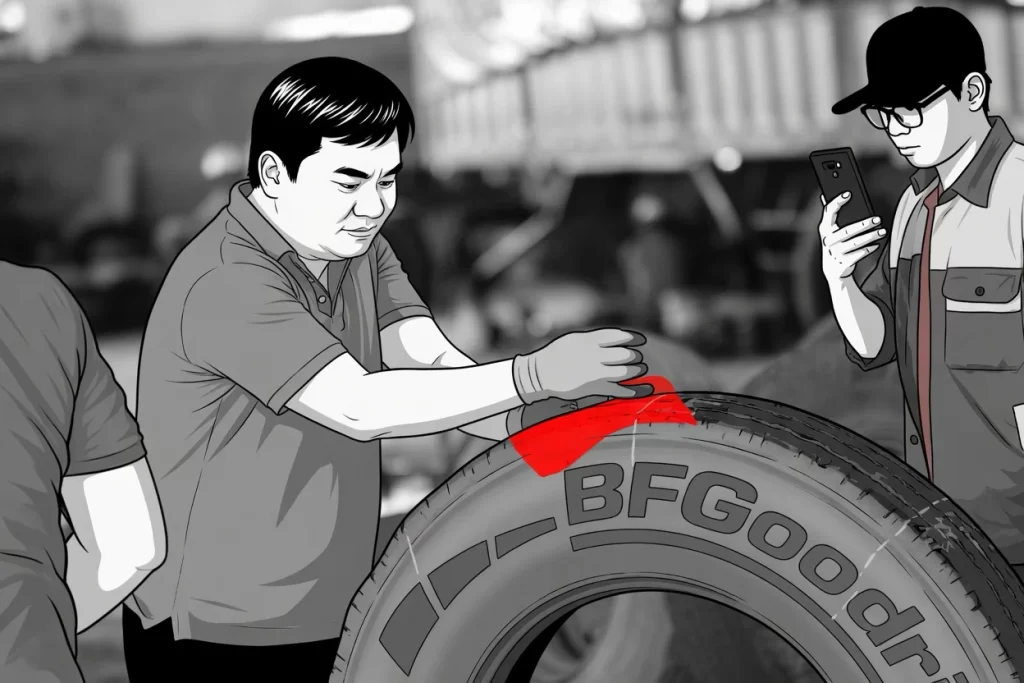
Before regrooving, the tire must be removed from the rim and undergo a thorough inspection:
- The tire must clearly display the word “Regroovable” on both sidewalls (in accordance with DOT standards or equivalent regulations).
- The remaining undertread thickness must be at least 2–3 mm (ideally 3–6 mm depending on manufacturer), measured at the shallowest point and checked in at least four positions around the tire.
- There must be no cracks, cuts reaching the casing ply, separations, bulges, or signs of severe impact damage.
- Uneven wear patterns (caused by misalignment, underinflation, or overloading) often indicate a weakened casing. These tires should be rejected immediately, even if the tread surface appears acceptable.
Second, Operators must be properly trained before performing regrooving.
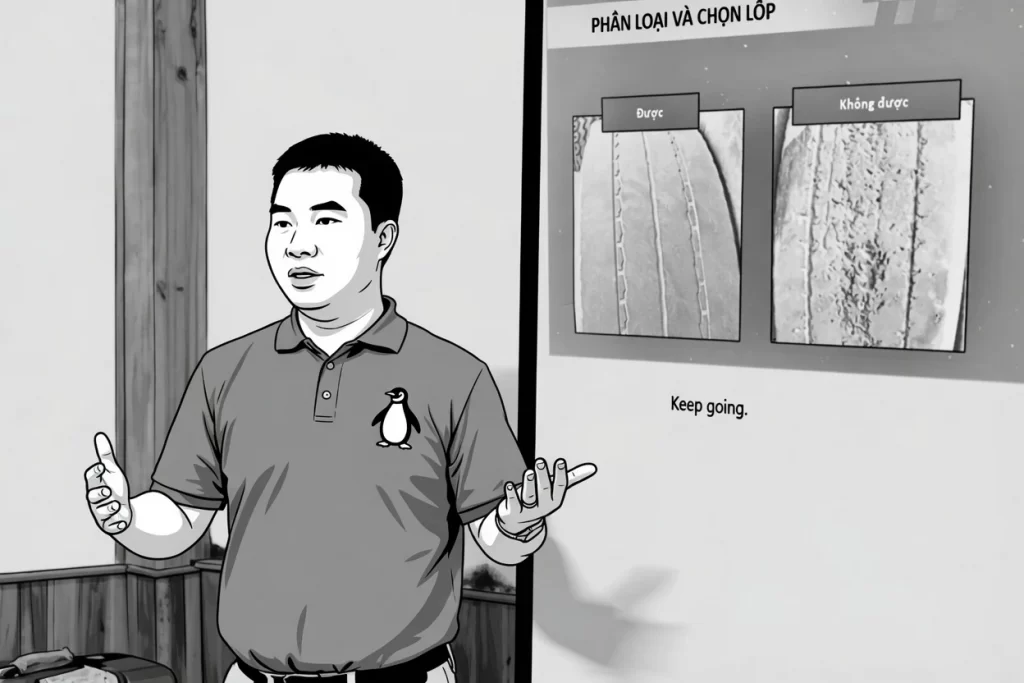
In many fleets, this step is still underestimated.
This includes understanding the regrooving process, accurately determining groove depth, selecting the appropriate blade for each tread design, and setting up the equipment correctly before starting.
In addition, the cutting machine temperature must be properly controlled.
Excessive heat can damage the undertread and casing structure, while insufficient heat may lead to uneven or incomplete cuts.
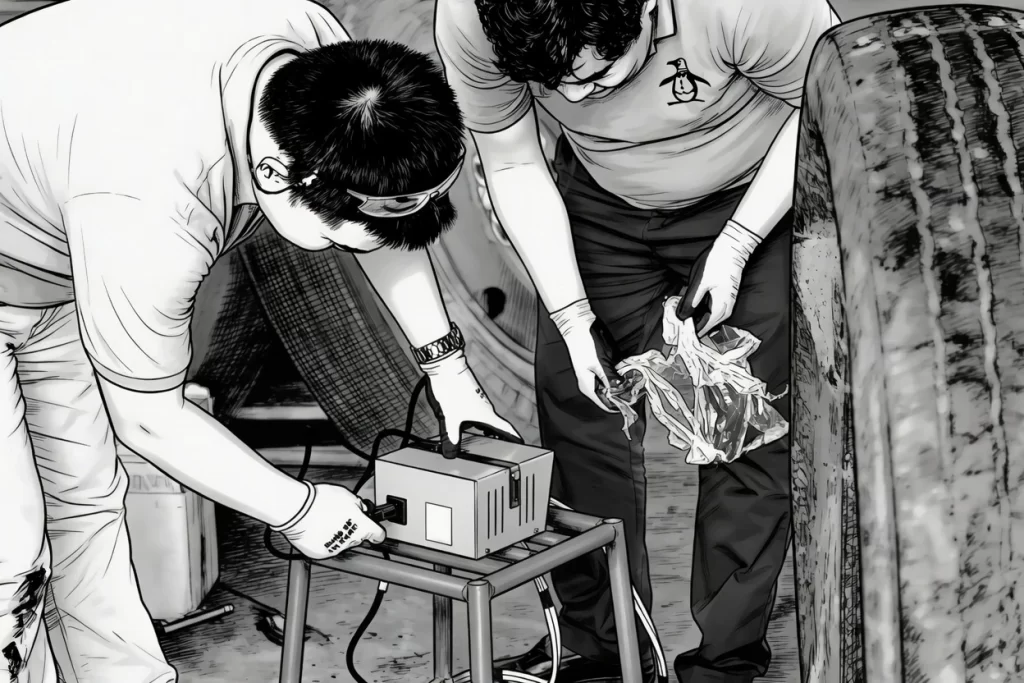
Consistent results depend not only on tools, but on trained execution under controlled conditions.
Third, regrooved tires must be tracked and regularly monitored.
Regrooving is not the final step—it marks the beginning of a more critical operating phase.
In fact, this is where risk becomes more sensitive.
All regrooved tires should be recorded at the time of cutting, including date, vehicle position, and mileage. This creates a clear reference point for evaluating performance and wear progression.
In addition, regrooved tires must be inspected on a monthly basis by trained tire technicians.
These inspections should focus on tread wear consistency, remaining groove depth, irregular wear patterns, and any early signs of casing fatigue or damage.
Consistent tracking and inspection ensure that any issue is identified early—before it turns into a failure.
Without proper monitoring, regrooving becomes a blind operation.
Finally, digital tracking is becoming increasingly important.
In Vietnam, many fleets are starting to adopt tire management software to monitor tire conditions—including regrooved tires.
Instead of relying solely on manual records, operators can now track key data such as regrooving date, mileage, tire position, inspection history, and wear trends in a centralized system. This improves visibility and reduces the risk of missed or inconsistent follow-ups.
Digital tools also help standardize decision-making.
By having clear data on each tire, fleets can better determine when to rotate, regroove, or remove a tire from service—based on actual performance rather than assumption.
As operations scale, manual tracking becomes difficult to maintain consistently. Digital tracking helps bring better control and visibility. It is becoming a necessary step toward better control, longer casing life, and improved performance.
Industry Data: What Tire Manufacturers Say About Regrooving
This shift is not unique to Vietnam—it aligns with how global manufacturers approach regrooving.
Regrooving is not new—it is a standardized practice recognized by major tire manufacturers.
According to Michelin, properly executed regrooving can extend tire mileage by up to 20–25%, by utilizing the remaining undertread designed for this purpose.
Bridgestone highlights its role in reducing cost per kilometer (CPK), particularly in long-haul operations with stable wear conditions.
Goodyear also notes that, when combined with proper maintenance and monitoring, regrooving helps maximize casing value and improve total cost of ownership (TCO). In many fleet programs, it is treated as a standard step in the tire lifecycle—not an option.
Across these manufacturers, the message is consistent:
Regrooving is part of the system—but only when the system is in control.
Nhat Diem Honq
Frequently Asked Questions About Regrooving
When the tread is deep, the longer rubber blocks deform more under load, creating higher micro-slip and faster wear (around 1.6 mm per 10,000 km).
After regrooving, the shorter tread blocks deform less, reducing slip and wear (around 0.8 mm per 10,000 km), which helps extend mileage and lower cost per kilometer.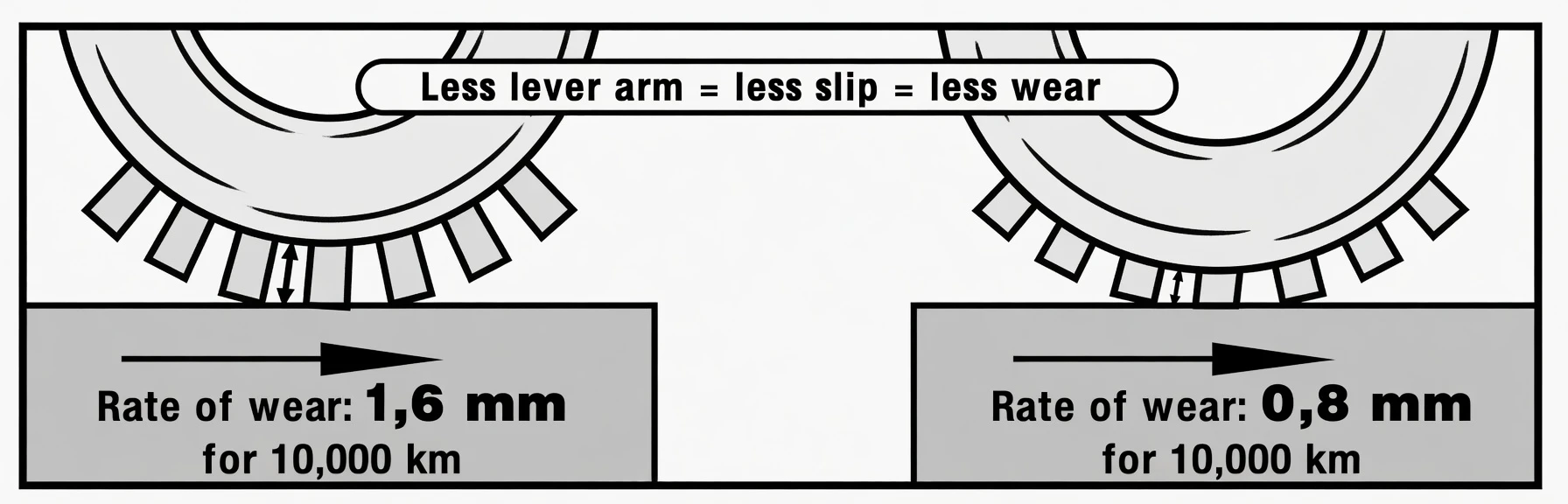
As a tire wears, there is less rubber movement in the tread, which means less energy loss during operation. Because of that, a worn tire generally generates less heat and has lower rolling resistance compared to a new one.
In practical terms, this can translate into improved fuel efficiency. For long-haul operations, using regrooved tires instead of new ones can help reduce fuel consumption—sometimes by up to around 2 liters per 100 km, depending on the vehicle setup and number of axles.
Less tread movement means less energy loss—and that can translate into fuel savings.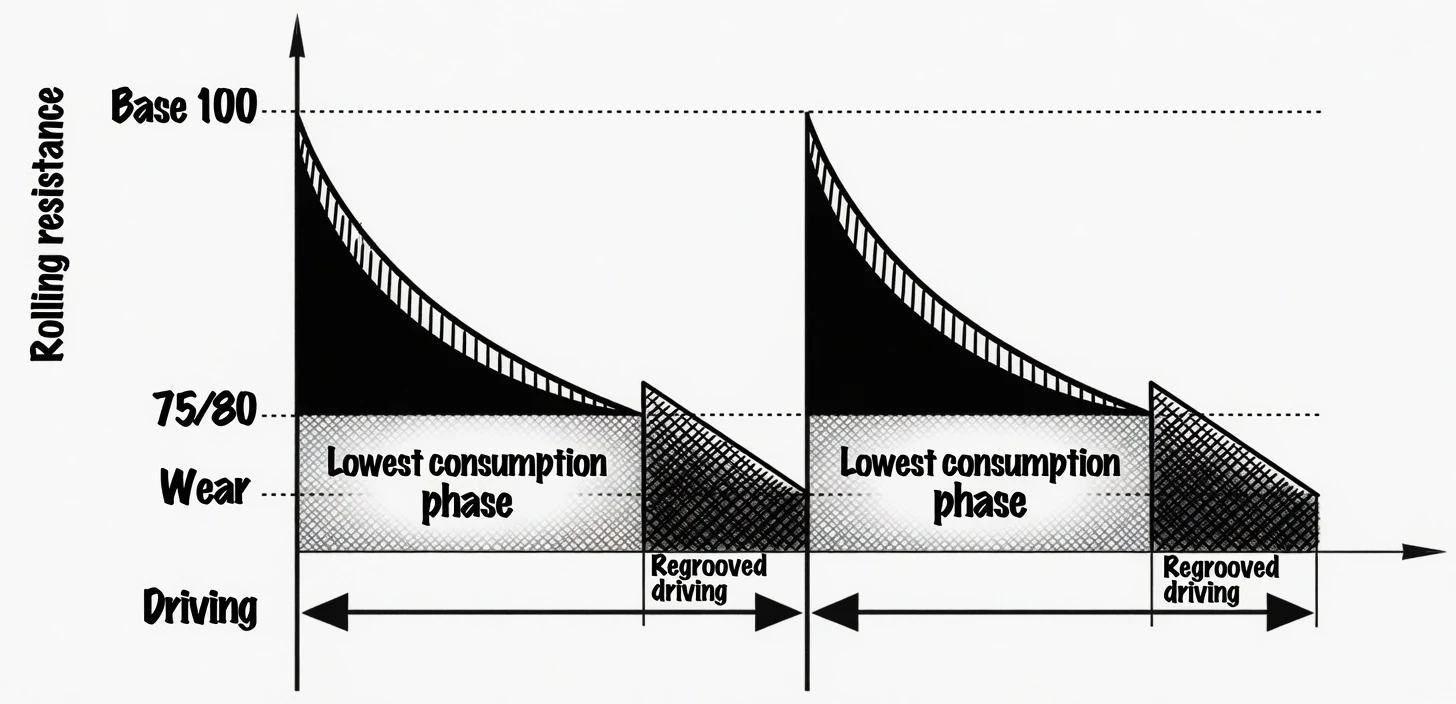
Regrooving is safe when done correctly because the tire is designed for it. Manufacturers leave a layer of rubber under the tread so new grooves can be cut without touching the steel belts. As long as the cut stays within this limit, the tire remains safe.
In simple terms, regrooving is part of the tire’s design—not a workaround. The safety is already built in; it just needs to be followed.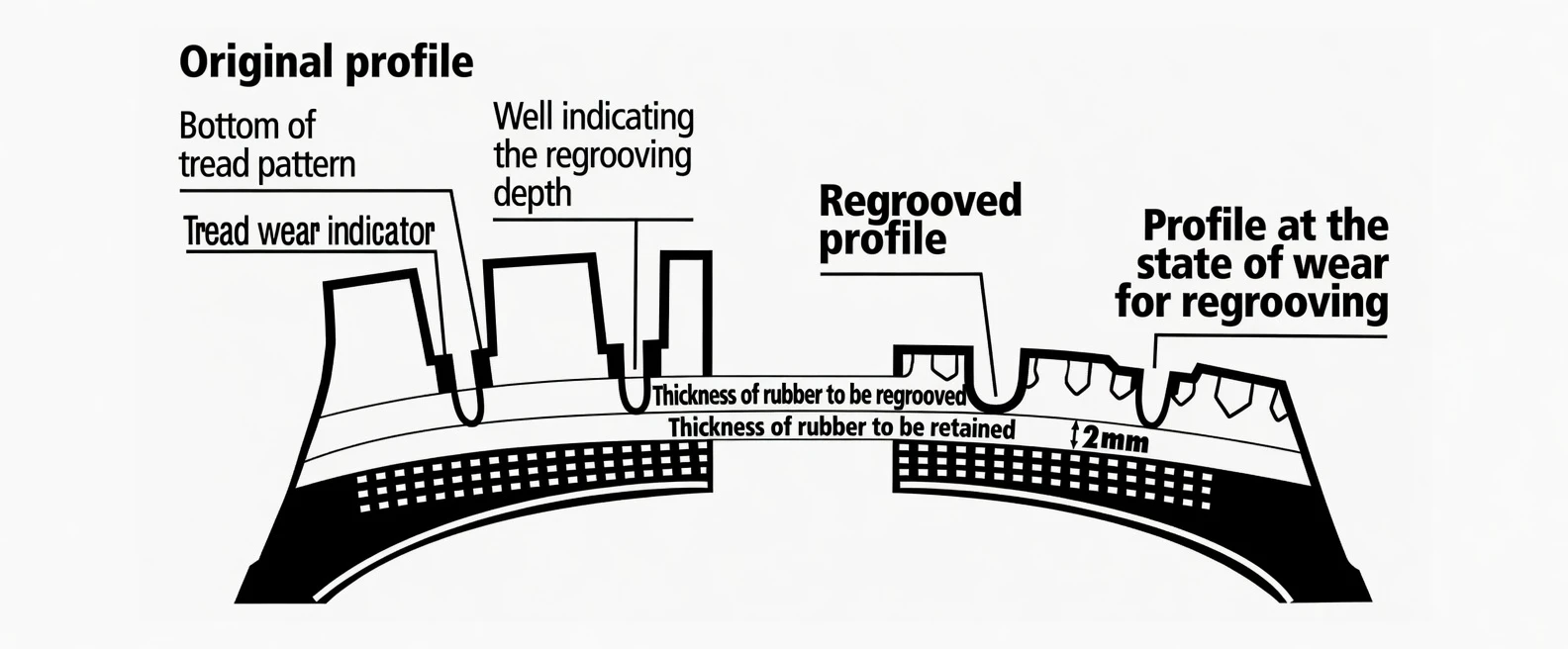
Regrooved tires are best used on drive axles, where they can deliver additional mileage and maintain good traction with controlled risk.
They can also be used on trailer axles, provided the tires are in good condition and the regrooving is done correctly.
However, regrooved tires are generally not recommended for steer axles, as this position requires the highest level of safety and vehicle control.
In practice: Drive = suitable | Trailer = conditional | Steer = avoid
st guidance comes from those who understand both tire design and actual condition.
Manufacturer or technical support – for correct limits and standards
A qualified tireman – for proper on-site inspection
Avoid decisions based on opinion or past experience.
Standards from the manufacturer, condition from the tireman.

