

Our Vision 2030
On the way to a more sustainable future: The mobility industry, manufacturers and suppliers are in the process of making individual mobility, freight transportation and the entire value chain more sustainable.
Continental’s Tire division has made sustainability an integral part of its corporate philosophy and anchored it in the foundation of its corporate values. “Our ‘Vision 2030’ strategy program shows us the way to sustainable mobility as a progressive company in terms of environmental and social responsibility,” says Ferdinand Hoyos, Head of the Tire Replacement Business in EMEA.
The company is convinced that sustainable and responsible business practices increase its ability to innovate and shape the future – and thus create added value for the company and for society. “Continental is known for bold innovations and ambitious goals,” Hoyos continued. “This also applies to our ambitions in the field of clean and safe mobility solutions.”
Continental is aiming for 100 percent climate neutrality along the entire value chain by 2050 at the latest. To make its tire production even more environmentally friendly, Continental is investing in energy- and resource-efficient as well as low-emission production processes. By 2040, the premium tire manufacturer aims to achieve climate-neutral tire production.
As a result of years of effort, Continental Tires has already achieved a leading position in energy consumption per ton of tires produced compared to the industry average. In 2024 alone, the tire division reduced its annual energy consumption by 50 gigawatt hours thanks to 83 energy-saving projects. That is roughly equivalent to the average annual electricity demand of 4,150 single-family homes.
Since the end of 2020, the electricity that Continental purchases for its tire production plants worldwide has been climate-neutral and comes from verifiably renewable sources. The company also operates large-scale photovoltaic systems for green electricity on site.
The transportation of people and goods will continue to be at the center of social and economic development in the future. Continental is working on long-lasting tires with optimized rolling resistance, and vehicle technologies that do not produce any drive-related emissions.
“The majority of vehicles still run on combustion engines, and that will remain the case in the medium term. That’s why we’re not just focusing on optimizing electric vehicles, but also supporting fleet operators in reducing the emissions of their combustion engines.”
Electromobility
Pressure increase
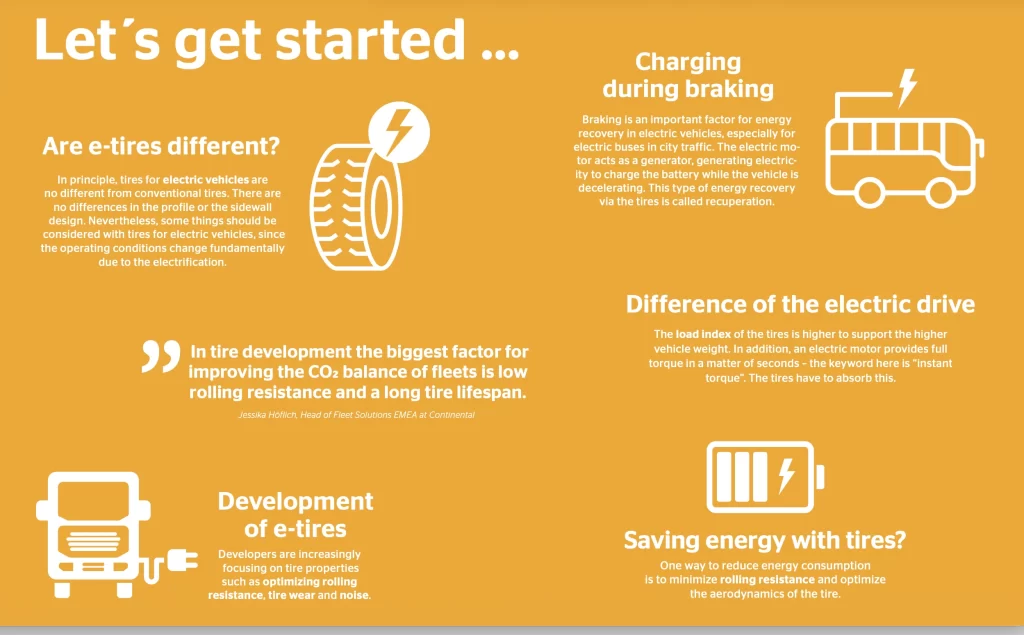
The electrification of the commercial vehicle sector is gradually picking up speed. More and more companies are turning to zero-emission transportation solutions in order to comply with the EU’s ever stricter environmental requirements, reduce operating costs, and operate more sustainably.
The political guidelines from Brussels are well known: Since heavy-duty vehicles account for over 25 percent of greenhouse gas emissions from road transport in the EU and more than six percent of the EU’s total greenhouse gas emissions, the Commission revised its CO2 emission standards and reduction targets in April 2024.
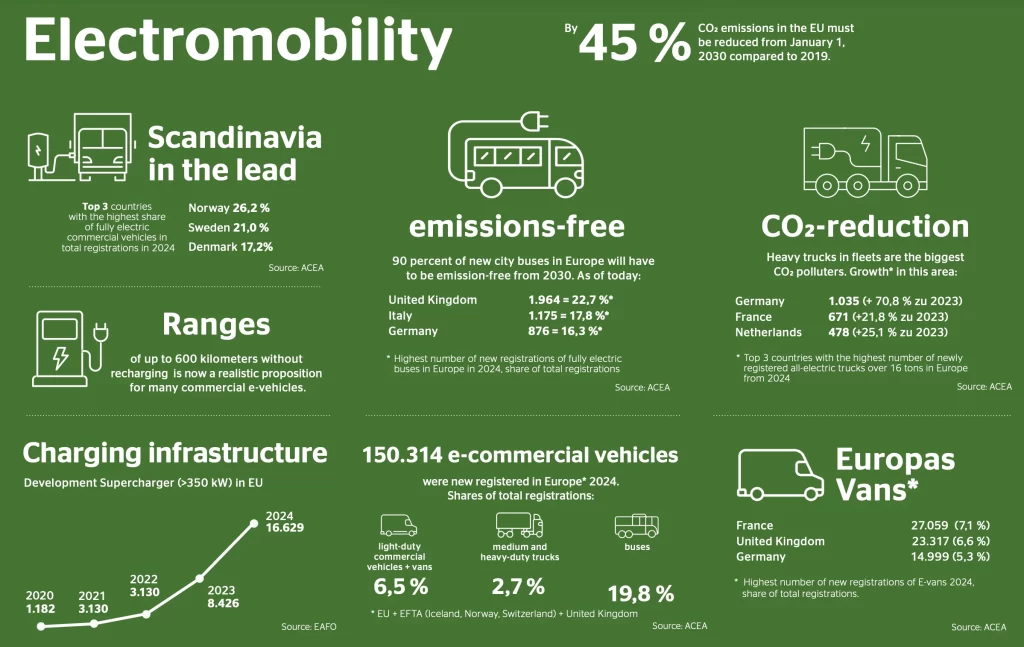
Compared to 2019 levels, CO2 emissions must be reduced by 45 percent from January 1, 2030, by 65 percent from January 1, 2035, and by 90 percent from January 1, 2040. In addition, 90 percent of new city buses in the EU must be emission-free from 2030, and 100 percent by 2035. Furthermore, specific emission reduction targets for trailers (7.5 percent) and semi-trailers (10 percent) will apply from 2030. The legislation will apply to almost all trucks (including work vehicles such as refuse collection vehicles, tipper trucks and cement mixers from 2035), city buses and coaches (over 7.5 metric tons) and trailers.
The reduction targets are accompanied, among other things, by measures to improve the still inadequate public charging infrastructure for battery-electric heavy-duty commercial vehicles. According to the “Regulation on the Deployment of Alternative Fuels Infrastructure”, EU member states must ensure that by December 31, 2025, charging locations are installed along at least 15 percent of the length of the Trans-European Transport Network (TEN-T) and that each charging location offers a charging capacity of at least 1,400 kW and has at least one charging point with an individual charging capacity of at least 350 kW.
The number of charging points and the charging capacity are to be further increased by December 31, 2027 and December 31, 2030. Similar requirements, albeit less stringent, also apply to safe and secure parking areas and urban hubs.
VECTO as a driver of e-mobility
The Vehicle Energy Consumption Calculation Tool (VECTO) is a software program developed by the European Commission to calculate the energy consumption and CO2 emissions of heavy-duty commercial vehicles. Since January 2019, the use of VECTO has been gradually extended to include an increasing number of vehicle groups: heavy duty trucks with standard axle configurations, medium duty trucks, trucks with specific axle configurations, buses and coaches. Since July 2024, VECTO also includes trailers. Based on vehicle type, weight, aerodynamics, tires and rolling resistance, drivetrain, power take-off and other parameters, the tool simulates CO2 emissions and fuel consumption in realistic driving cycles. VECTO is therefore used to set CO2 reduction targets for road freight transport and to promote the development of more efficient and climate-neutral vehicles.
The calculation works
The number of new registrations of zero-emission commercial vehicles is still at a rather low level, especially for heavy trucks over 16 metric tons. However, given the challenges posed by climate change, alternative drives will shape the future of transportation promoting both sustainable logistics and cost efficiency.
At first glance, the 2024 percentages for zero-emission commercial vehicles published in the latest new registration statistics of the European Automobile Manufacturers’ Association (ACEA) look quite promising in some countries. For example, the number of new registrations of fully electric buses across all 27 EU states rose by almost 27 percent, with the market share increasing from just under 16 to 18.5 percent. In the medium and heavy-duty truck segment, Italy, Sweden and Germany, among others, recorded striking increases of 115 percent, almost 60 percent and over 57 percent respectively. In the all-electric vans segment, for example, Hungary, the Czech Republic and Denmark saw high growth rates of 106 percent, 76 percent and over 53 percent respectively. However, these figures should not obscure the fact that there is still a great deal of room for improvement overall. In 2024, for example, the share of all-electric trucks in total registrations was just 2.3 percent.
The fact is battery technology has improved considerably in recent years. Ranges of up to 600 kilometers without recharging are now realistic for many commercial vehicles. In addition, fast-charging technologies enable a high level of vehicle availability in operation. As soon as megawatt charging is available and standardized across manufacturers, the batteries installed in an electric truck, for example, can be charged from 20 to 80 percent in about 30 minutes at a corresponding charging station with a power output of around one megawatt. Major manufacturers such as Daimler Truck, the Traton Group and the Volvo Group are investing heavily not only in the development of the corresponding vehicles, but also in the expansion of the charging infrastructure.
TCO supports battery-electric drives
To replace diesel truck technology, which is still widely used in Europe, especially for trucks, at over 90 percent, there are basically several decarbonization paths available – including battery-electric and hydrogen-powered fuel cell trucks, hydrogen trucks with internal combustion engines, and conventional trucks powered by alternative fuels. One thing is clear: the market development of these truck technologies and fuels will depend above all on their economic performance. The International Council on Clean Transportation (ICCT) has therefore conducted a study to examine the Total Cost of Ownership (TCO) for different truck classes. The analysis covers several segments of heavy-duty vehicles, including long-haul tractor units with a gross vehicle weight of up to 40 tons, regional and urban trucks, and light-duty urban trucks. The TCO includes the costs of purchasing trucks, European average fuel prices, maintenance, and European average tolls, taxes, and levies.
“Among other things, our study shows that battery-electric trucks will be the most cost-effective decarbonization path for most truck classes before 2030,” says Hussein Basma, Senior Researcher in the ICCT’s Heavy-Duty Vehicles Program. Medium- and light-duty battery-electric city trucks are already on a par with their diesel equivalents in terms of total cost of ownership (TCO). This is due to lower operating costs compared to diesel, which offset the higher purchase price. For long-haul heavy-duty trucks, the ICCT expects TCO parity with diesel to be reached between 2025 and 2026.
Conventional trucks powered by alternative, low-greenhouse gas fuel options such as HVO, e-diesel or bio-CNG, on the other hand, are likely to have difficulties in matching diesel trucks, at least in terms of costs. “By 2030, they will also have 15 to 45 percent higher total cost of ownership than their zero-emission counterparts,” predicts Basma.
Funding programs for Europe
The transition to more sustainable transport solutions such as electric commercial vehicles costs money. Some countries in the EU have set up subsidy programs to support fleet operators in the transformation.
Countries such as Finland, Norway, and Austria have launched subsidy programs to help electric commercial vehicles and the associated charging infrastructure get off the ground. These range from purchase incentives for electric trucks to climate and eco-bonuses that cushion some of the additional financial outlay.
Finland: In Finland, subsidies are available for the purchase of electric trucks or electric trailers. A purchase incentive of €6,000 to €50,000 is available for electric trucks. This must be claimed before the purchase. The purchase contract must be submitted to the authorities no later than two months after the purchase.
Norway: In Norway, the state-owned energy company Enova subsidizes electric trucks and other zero-emission vehicles over 4.25 tons with up to 40 percent of the additional costs. Municipalities also offer separate subsidy programs from time to time.
Sweden: The Swedish Energy Agency has been tasked by the government with paying out climate bonuses for heavy electric trucks, eco-friendly trucks, and biogas-powered gas trucks. Climate bonuses for heavy trucks can be applied for by companies, municipalities, and regions that purchase a new electric truck, eco-friendly truck, or gas truck. The amount of the subsidy is calculated based on various parameters. It can be granted for up to 25 percent of the acquisition costs. Subsidies for light electric trucks can be applied for until October 2025.
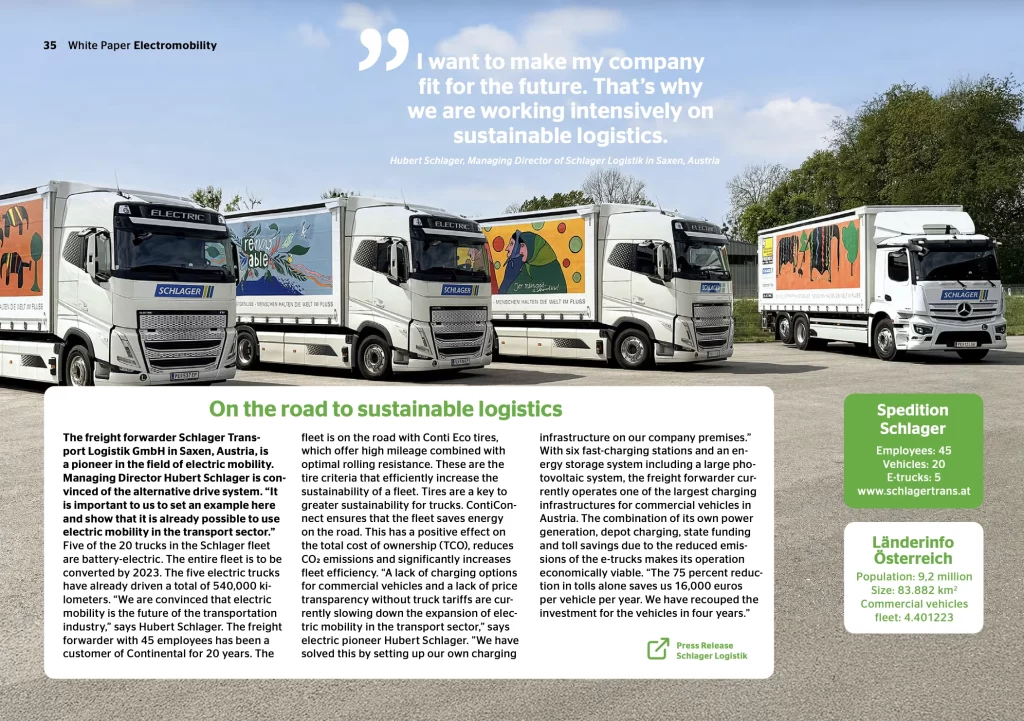
Austria: The Austrian Research Promotion Agency (FFG) has published a subsidy program for zero-emission commercial vehicles and infrastructure, known as ENIN. This will run until June 30, 2026. The next round of tenders will take place in the third quarter of 2025, and the next one after that at the beginning of 2026. In Austria, 80 percent of the additional costs (compared to comparable diesel trucks) and 40 percent of the investment costs for (charging) infrastructure are covered for battery-electric commercial vehicles. The funding consists of non-repayable investment cost subsidies.
Switzerland Switzerland has a comparatively high share of new electric truck registrations at 11 percent. Subsidies for electric trucks vary greatly from canton to canton and at the municipal level. Depending on the canton, there are tax breaks or subsidies for charging infrastructure (swissemobility.ch).
Less toll thanks to CO2 savings
According to the Eurovignette Directive, climate-friendly e-commercial vehicles are exempt from tolls until the end of 2025. The EU Commission plans to extend this period. The CO2 fleet limits are also to be revised.
In 2022, the European Parliament adopted a distance-based road toll for trucks that should help to reduce CO2 emissions. With this Eurovignette Directive, there is now a toll system for motorways in Europe based on the CO2 emissions of vehicles. The directive provides a toll exemption for zero-emission heavy-duty commercial vehicles until the end of 2025. From January 1, 2026, a 75 percent exemption is planned. To support the transition to zero-emission freight transport in the EU, the EU Commission plans to extend this deadline. The European freight forwarders’ association Clecat has also come out in favor of an extension of the toll exemption for zero-emission heavy-duty vehicles (ZEVs).
Accelerating the transition The freight forwarders’ association Clecat is calling for this exemption to be extended until December 31, 2030. This is because the slow introduction of zero-emission vehicles in road freight transport is due to significant operational and financial challenges. A lack of charging and refueling infrastructure, high acquisition costs and limited financing options are hindering the widespread use of clean technologies. Clecat emphasizes that extending the toll exemption will provide crucial economic relief, enabling the market for zero-emission vehicles to grow and become a more competitive choice for transport companies. An extension until 2030 is also in line with the EU’s climate targets and CO2 emission standards for heavy-duty vehicles, which aim to reduce emissions by 45 percent by 2030. In addition, the European Association of Freight Forwarders and Logistics Operators underlines the need for a holistic approach that combines regulatory and economic measures to achieve a sustainable and economically viable transition to zero-emission freight transport.
CO2 fleet targets The EU is also planning to relax the CO2 fleet targets. Until now, the targets have had to be met annually. In the future, it may be possible for companies to exceed the targets in one or two years and compensate for this with above-average performance. This relaxation could help to ensure that industry can continue to invest without lowering the overall targets.
Battery formats and function
Designwerk Technologies offers freight forwarders a tailor-made battery technology. Since 2024, the e-mobility specialist has had a battery cell with lithium iron phosphate cell technology (LFP) in its portfolio.
A distinction is made between primary and secondary batteries. Primary batteries are disposed of after use and discharge or recycled. Secondary batteries are rechargeable and are used, among other things, for installation in electrically powered commercial vehicles. They are also called accumulators. Secondary batteries have different chemical compositions and modes of operation. “Lithium-ion battery cells of the NMC type, with lithium nickel, manganese and cobalt oxides, are characterized, for example, by a high energy density, low self-discharge and, compared to other cell types, a more consistent, high-power output,” explains Markus Erdmann, Head of Product Management at Designwerk.
Battery cells for storage The smallest unit in a battery is the battery cell. Electrical energy is stored in them and accessed as needed. Battery cells come in different formats. The most common forms in e-mobility include prismatic, cylindrical and pouch cells. Battery cells with lithium iron phosphate (LFP) cell technology are characterized by a high number of charging cycles and a long service life. “The lower height of the smaller LFP battery allows it to be used in the lowliner, which enables up to 15 percent higher volume capacity and is used primarily in distribution transport with a lower range,” says Erdmann.
Companies in long-distance transport logistics that rely on the highest energy densities due to the required range tend to use high-voltage battery systems with nickel-manganese-cobalt cell technology (NMC). Battery modules are created from the battery cells, which help to organize and manage the individual cells in a system.
Battery instead of tank The capacity and placement of the battery packs are adapted to the application requirements. “This not only means that the battery capacity is adapted to the route profile and the load, but also that the high-voltage battery systems can be installed in different places in the vehicle – whether as a battery tower behind the cab, on the side of the chassis or integrated into the vehicle body,” says Markus Erdmann.
LFP batteries remain on trend
Swiss electric mobility specialist Designwerk has been a development partner of Continental for years. Together, the two companies are exploring the requirements of commercial vehicles and applying their findings to tire development. Markus Erdmann, Head of Product Management, reports on the latest progress in battery technology.
Where do we stand today in battery technology in the commercial vehicle segment? We are in a much better position than many studies predicted, especially for heavy-duty commercial vehicles. In several markets, the ten percent mark for battery-electric truck registrations was exceeded at the end of 2024, even before many OEMs ramped up series production. Battery-electric commercial vehicles (BEVs) already offer a positive total cost of ownership in many markets. The reason for this rapid development lies in the high rate of improvement in the batteries themselves. Over the past ten years, we have seen an improvement of more than ten percent per year.
How will battery performance and range develop? LFP batteries remain the biggest trend. They will hold sway whenever achieving the greatest range or operating times is not essential. They will also gain in importance in the medium term because the rate of improvement is currently highest in this area. Until now, LFP batteries have been chronically weak at cold temperatures. However, I have recently heard about new batteries that can still deliver high performance even at minus 30 degrees Celsius. In the coming years, we will see the addition of manganese to lithium iron phosphate batteries to further increase energy density without negatively affecting cycle stability. Raw materials are also relatively uncritical for LFP batteries, as neither cobalt nor nickel are used.
How is the battery weight to total weight ratio developing? Battery weight remains an issue, but we have made significant progress. Up to around 500 kWh, our battery-electric trucks no longer have any payload disadvantage in many applications. The electric powertrain is significantly lighter than that of a diesel truck, including fuel tanks. In this configuration, the batteries weigh around 2.8 metric tons. But with the extra two metric tons of payload legally permitted for BEVs, they are no longer at a disadvantage here. With larger battery capacities of e.g. 1,000 kWh, there is still a loss of payload to factor in. However, this loss becomes less severe with each generation of battery due to the rate of improvement. About five years ago, 680 kWh in one of our units weighed roughly the same as 1,000 kWh today.
How important is battery recycling? The potential and importance of battery recycling are huge. It is vital we reuse the high-quality raw materials in batteries, and we will do so. This is also key to accelerating electric mobility. Studies show that with recycling and new battery technologies such as LFP, we will have enough raw materials to ramp up and volume-produce BEVs. I also expect it to become common practice in the future for recycling companies to pay us for old traction batteries. After all, these are valuable raw materials.
Stable conditions are important
In an interview, Thomas Fabian, Chief Commercial Vehicles Officer at ACEA, explains what the persistently low numbers of newly registered zero-emission commercial vehicles over 3.5 metric tons in Europe mean in terms of the EU’s ambitious CO2 targets and why cost-effectiveness is a key factor in the purchasing decision.
Manufacturers are starting out with a relatively extensive range of vehicles. Nevertheless, registration figures remain at a very low level. Why do you think that is? The vehicles are not the problem. Manufacturers are ready and are consistently expanding their portfolios. This was once again clearly demonstrated at the IAA Transportation 2024 show. The problem is that the environment the vehicles are operating in is not right. Although the Alternative Fuels Infrastructure Regulation (AFIR) adopted by the EU in 2023 obliges member states to set up charging and refueling stations for all vehicle segments, the requirements will not be sufficient to meet actual demand. According to the EU, there are currently around 15,000 charging stations with a charging capacity of 350 kW. However, only a fraction of these are suitable for heavy-duty commercial vehicles. Most charging stations cannot be accessed by a truck with a trailer, and unhitching the trailer is not an option for drivers.
Is there a risk that the decarbonization will be slowed down? Unfortunately, yes, this risk is not insignificant. Given the need for road freight transport to become more climate-friendly, EU legislators have agreed to reduce CO2 emissions from heavy-duty vehicles by 45 percent from 2030, 65 percent from 2035 and 90 percent from 2040 – in each case compared to 2019 levels. We will only achieve the targets for 2030 if more than a third of all new trucks sold each year are emission free. This means we now have just five years to increase the proportion of new zero-emission commercial vehicles registered from just over two percent today to around 35 percent. This would require around 50,000 publicly accessible charging stations suitable for heavy-duty vehicles – including around 35,000 megawatt chargers – plus around 2,000 hydrogen filling stations. However, simply installing charging stations is not enough; we also need sufficient grid capacity. In this respect, we are also seeing considerable bottlenecks throughout Europe.
In a nutshell: who do you think faces the greatest challenges right now? Politicians must create the right conditions to enable faster and more secure investment in charging and refueling infrastructure and alternative fuels. At the same time, transport companies must be supported so that they have solid business cases for zero-emission vehicles and can invest quickly in fleet renewal. If we succeed in making even heavy-duty road freight transport climate neutral, we will make a significant contribution to decarbonizing the upstream chains and logistics systems of all other industries.
Time is running out
According to Martin Schmied, Head of the Environmental Planning and Sustainability Strategies Department at the German Environment Agency, there is still a long way to go before climate neutrality is achieved. However, when it comes to greenhouse gas emissions, he believes that battery-powered trucks have a clear advantage over vehicles with combustion engines.
The Federal Climate Action Act in Germany and the EU targets for reducing greenhouse gas emissions have resulted in a now familiar list of requirements. For example, achieving the medium- and long-term climate protection goals set out for the transport sector will involve reducing and relocating traffic, as well as stepping up the use of alternative drive systems and post-fossil fuels. With road freight traffic predicted to increase further, these are things we need to do fast.
“The longer it takes to reduce greenhouse gas emissions, the greater the annual reduction will need to be,” warns Martin Schmied, Head of the Environmental Planning and Sustainability Strategies Department at the German Environment Agency (UBA). This will become increasingly difficult over time. In Germany, for example, the federal government’s latest projection report forecasts that the sector will miss its emissions goals up to 2030 by around 169 million metric tons of CO2 equivalent.
Here, Schmied refers to a study commissioned by the German Environment Agency and conducted by the Institute for Energy and Environmental Research in Heidelberg, which compares the environmental performance of alternative drive systems with that of conventional drive systems. Sustainable mobility naturally also implies the careful use of resources. When considering the overall climate footprint of a vehicle, it is therefore important to take into account the emissions generated over its entire service life – including the manufacture of the vehicle and batteries.
As Schmied explains: “In terms of greenhouse gas emissions, battery-electric trucks already have a clear climate advantage over vehicles with combustion engines or fuel cells.” This advantage will become even wider in the future with the further expansion of renewable energies. According to the UBA study, the greenhouse gas potential of an electric truck in 2030 will be 55 to 60 percent lower than that of a diesel-powered equivalent. This figure will increase to as much as 78 percent if the use of renewable electricity expands more quickly.
Martin Schmied also sees the grading of toll rates according to CO2 emissions as an incentive to use climate-friendly vehicles. The German Motorway Toll Act provides for a toll exemption for zero-emission heavy-duty vehicles until the end of 2025. From 2026, a 75 percent toll reduction will apply to cover infrastructure costs, in addition to the toll rates for noise and air pollution. According to a fact sheet published by the National Organization for Hydrogen and Fuel Cell Technology (NOW), savings of up to €160,000 in toll costs are possible over a five-year period for toll-liable mileages of 100,000 kilometers per year.
Tires for e-commercial vehicles
Tires for e-trucks
Commercial vehicles are responsible for about one-third of greenhouse gas emissions in the transportation sector. With the EU Emissions Regulation and the introduction of the VECTO tool, the focus for manufacturers and fleet operators is on reducing CO2 emissions. Tires have a major influence on this.
A fleet’s CO2 emissions are directly related to energy consumption and tire rolling resistance. This makes them an important factor in terms of sustainability, efficiency and green fleet management.
VECTO as a driver In August 2019, the EU Emissions Regulation came into force and the VECTO tool was introduced. VECTO stands for Vehicle Energy Consumption calculation Tool. According to the regulation, OEMs must reduce the CO2 emissions of the vehicles covered by the regulation by at least 40 percent by 2030 compared to 1990. This requirement is one of the biggest drivers for the development of electric trucks for zero-emission transportation.
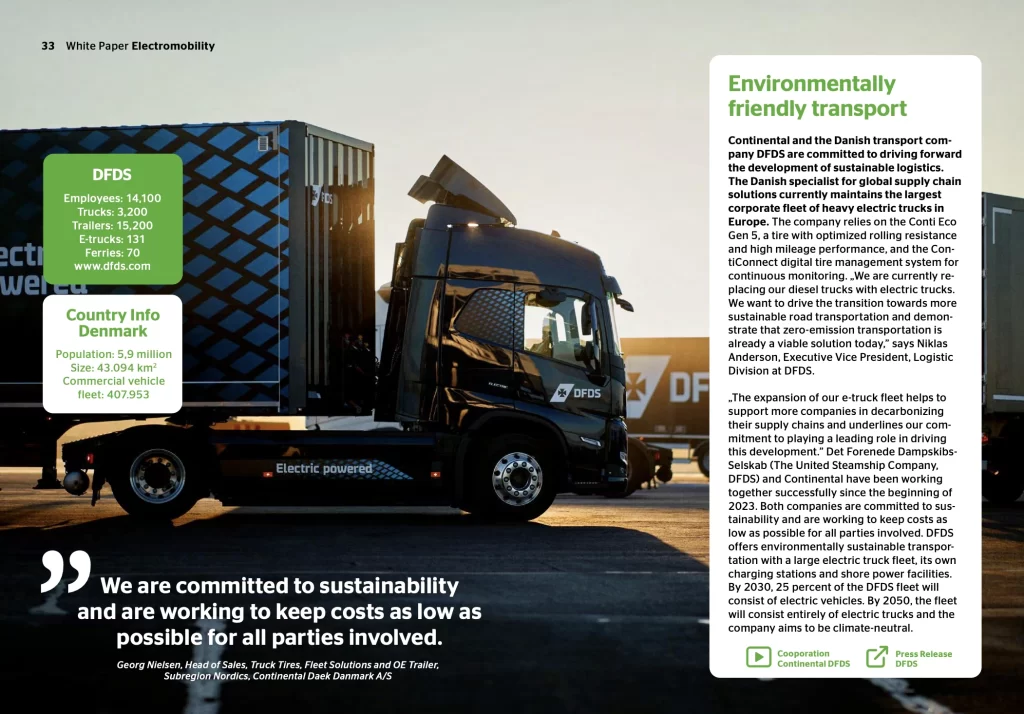
Low rolling resistance, high mileage Continental offers fleet operators two tire lines for their electric commercial vehicle fleets. The Conti EfficientPro HS 5/HD5 with the silica compound vec2Sil was developed to optimize fuel and energy efficiency in long-haul transport and reduce CO2 emissions. “With Conti EfficientPro HS 5/HD5, we are helping our customers to meet strict CO2 reduction targets, reduce their operating costs and prepare for the future with electric drives,” says Hinnerk Kaiser, Head of Product Development EMEA at Continental. The new vec2Sil technology combines reduced rolling resistance with high mileage. The new Conti EfficientPro HS 5/HD5 therefore helps fleet operators to save energy on the road and reduce their toll costs when configuring new trucks with the Conti EfficientPro HS 5/HD5. A higher load index increases the load-bearing capacity of the tires, which means that there is no need to compromise on the payload of electrically powered trucks.
Tire selection and CO2 toll The fifth generation of the ContiEco HS 5/HD5 line of tires also offers fleet operators the opportunity to significantly reduce fuel consumption, CO2 emissions and costs in both regional and long-distance transport. Optimized rolling resistance and high mileage have a positive effect on the ecological footprint. “This makes the right tire choice even more important for fleet operators within the EU, particularly in view of the emission-based toll components,” says Hinnerk Kaiser.
“We cannot do it alone”
As a recycling specialist, sustainability is woven into the Remondis Group´s business model. With this in mind, the company has been focusing on alternative drive systems in a wide variety of forms for many years. However, Sascha Hähnke, Managing Director of Remondis Sustainable, believes fleet operators still face many challenges on the road to climate-neutral road freight transport.
How do you see electric mobility in the waste management industry as things stand?
Generally speaking, the vehicles now being series produced by OEMs are becoming increasingly reliable. The number of technical problems and breakdowns is significantly below those for the vehicles from the retrofitting companies we used to rely on. Operating ranges are increasing, the spread of body variants is growing and prices are falling. But we have to remain realistic: the switch to alternative drive systems can only happen gradually, as many companies will initially have to continue using their existing diesel fleets in order to remain economically viable. The costs of new vehicles and the necessary charging/refueling infrastructure are an enormous challenge.
You don’t expect registrations to rise significantly for the time being?
On the contrary, we expect to see a decline in the coming months, at least in Germany. Many of the current figures are based on past subsidy programs, which played a key role in promoting alternative drive systems. Now that some of these programs have expired, many companies will be less willing to invest. After all, the acquisition costs can no longer be recouped so easily.
But vehicles with alternative drive systems are being used more and more in cities.
That’s definitely true. In Freiburg, for example, we at ASF are strongly committed to hydrogen and have over 15 fuel-cell vehicles in operation there. In Frankfurt, FES has several battery-electric waste collection vehicles on the road. At other locations, such as in the Cologne metropolitan area and in Münster, we are increasingly relying on biogas. Where we operate our own biogas plants, we have created a closed-loop system: we collect organic waste, produce biogas from it and use the biogas to fuel our vehicles. It’s an efficient solution. However, the problem remains that there is no uniform approach. Every city has its own strategy, determined by regional factors and political decisions.
Tires for e-axles
As a strategic partner of Trailer Dynamics, Continental is developing a specific tire for use on electric trailers. This tire will not only offer particularly balanced performance in terms of traction and rolling resistance, but also a particularly high load capacity.
In the race for greater climate protection and efficiency, the focus is no longer solely on tractor units, especially in heavy-duty goods transport. E-trailers also have great potential to make a significant contribution to the decarbonization of logistics. Trailer Dynamics is one of the companies demonstrating the potential that can be tapped here. The German company develops e-trailers that are equipped with their own electric drive train and thus continuously support the tractor unit while driving. At the heart of the development is the interaction between a powerful electric axle, intelligent drive train control via the kingpin, and power supply from a robust LFP traction battery.
40 percent reduction in CO2 The e-trailer can thus cover long distances of 500 to 700 kilometers. Depending on the route, topography, and payload, the electric powertrain saves an average of 40 percent diesel and CO2. In combination with an electric tractor unit, the range can be more than doubled. According to Trailer Dynamics, the e-trailer can be combined with any tractor unit, regardless of the manufacturer, meaning that millions of diesel tractor units in the European fleet can be converted to low-emission green logistics. As the exclusive partner for tires, Continental has been on board from the start. “Since the drive axle actively transmits power, the tires, such as our new tires specially developed for trailers with electrified drive axles, must offer optimum traction, even in wet and snowy conditions,” says Ujwal Joshi, Automotive Engineer and VECTO Manager Original Equipment Commercial Vehicle Tires at Continental Tire Germany.
Reducing energy consumption The future tires for the e-trailer will also increase driving safety in various weather conditions thanks to sipes and improved grip – all with reduced wear. “At the same time, our tire’s reduced rolling resistance will help minimize the energy consumption of the electrified drive axle, extend the range and ultimately reduce operating costs,” continues Ujwal Joshi. The tire expert sees another argument in favor of this future tire, which can be used on both the electrified trailer axle and on the first and third trailer axles, in the possible increase in load capacity to enable a consistent payload despite the increased dead weight of the battery. Compared to the current 385/65 R 22.5 Conti EcoPlus HT3+ long-haul tire, the tire will be launched in 2026 with an additional ton per axle, resulting in an axle load of five tons each.
Tires for e-buses
Across Europe, municipalities and municipal transport companies are increasingly turning to emission-free electric fleets.To meet the high practical requirements, tires are needed that combine durability, safety and efficiency.
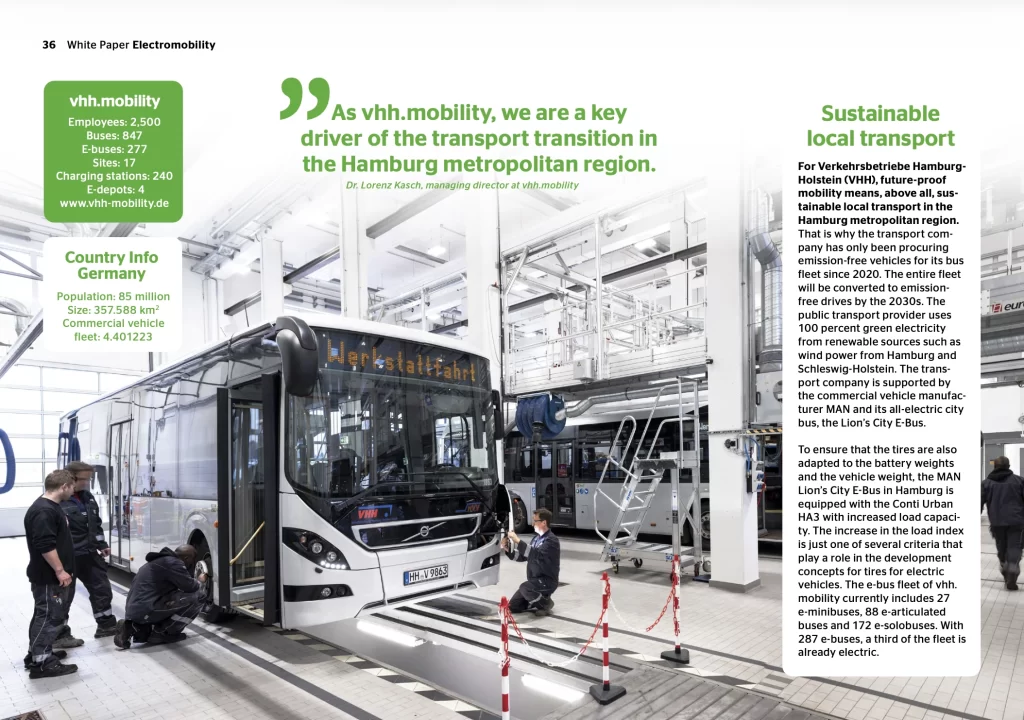
The degree of electrification of urban bus fleets in Europe is steadily increasing. In 2024, 18.5 percent of new city buses registered in the EU were electric. This trend is expected to increase in the coming years. Due to their higher torque and weight compared to diesel-powered buses, electric buses place special demands on the tires. In addition, there are the stresses caused by frequent stops and sharp-edged curbs. Continental has developed the Conti Urban HA 5 to meet these needs. Thanks to a robust construction and innovative materials, the tire line can withstand the increased stresses.
Key features The key performance features are high mileage, low rolling resistance and for customers that want it also future-proof digital monitoring. “The Conti Urban HA 5 is a significant advancement in city tire technology,” says Hinnerk Kaiser, Head of Product Development EMEA at Continental.
More sustainability The Conti Urban HA 5 was developed with sustainability in mind. The tire’s reinforced sidewall and robust rubber compound increase its resistance to curbs and other obstacles. “The tire’s design stands for durability and supports our ContiLifeCycle concept, which extends the tire’s lifecycle and reduces its environmental impact by enabling multiple tire lifes via retreading. With our focus on sustainability, we want to help our customers achieve their environmental goals – without compromising on performance.”
Tires for e-vans
With the increase of electric vehicles in van fleets, especially for last-mile delivery, tires are a key factor in achieving optimal performance, high efficiency and maximum cost-effectiveness.
In inner-city distribution, vans with combustion engines are increasingly being replaced by electric alternatives. According to the S&P Global Engine Production Forecast, sales of electric vans will increase eightfold between 2023 and 2036. This corresponds to an average growth rate of 18 percent per year.
Higher loads for tires Compared to vans with combustion engines, electric vans place higher demands on tires. The weight of the battery increases the load on the tires and can lead to more wear. The full torque of electric motors can also affect tire wear. Optimized rolling resistance improves the energy efficiency of the van and thus increases the range of the vehicle. In addition, noise reduction is another important factor in the development of van tires. This is because electric motors are much quieter than combustion engines, so the rolling noise of tires is more noticeable. As a premium tire manufacturer, Continental has continuously refined its research and development efforts to support the rapid electrification of van fleets.
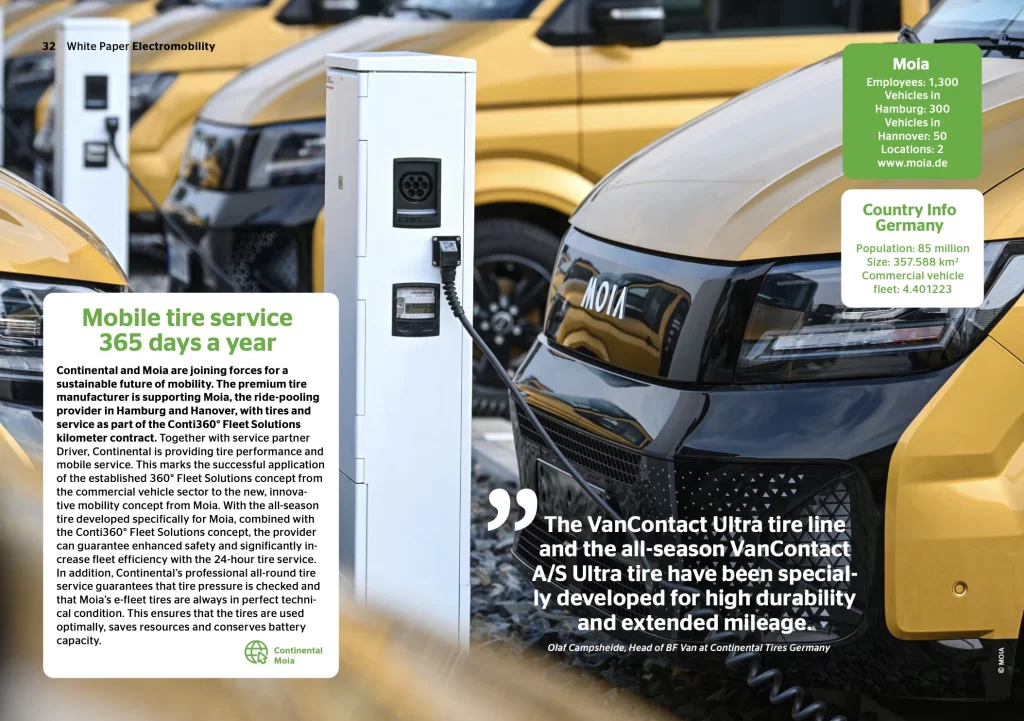
Portfolio is EV-compatible The entire van tire portfolio is designed to be EV-compatible. All new tire developments carry a special EV logo. In particular, the VanContact Ultra tire line and the all-season VanContact A/S Ultra tire have been specially developed for high durability and extended mileage. Their robust construction ensures that they can withstand the increased weight and high torque of electric vehicles and provide high mileage. The VanContact Eco has been designed with optimized rolling resistance to improve energy efficiency during the course of 2025. Continental will add the VanContact A/S Eco to its portfolio. In addition, Continental has refined its van tire technology to minimize rolling noise.
High fleet efficiency By selecting the right tires for electric delivery vans, fleet operators can significantly improve durability, safety and overall efficiency. This makes the transition to electric mobility more cost-effective and sustainable.
New tread concepts
Hinnerk Kaiser, Head of Product Development EMEA, explores the requirements currently at the forefront of tire development and how they are being fulfilled.
In the replacement market for electric trucks and buses, range is currently the most important factor. This means that tires with low rolling resistance are the preferred choice, as this has a direct impact on vehicle range. In addition, electric drive systems are characterized by high drive torque under acceleration and high braking torque during recuperation. We have therefore placed particular emphasis on abrasion in the tire development phase. High traction on both dry and wet road surfaces also plays an important role for electric vehicle tires.
As in the original equipment market, there has also been a trend in the replacement sector towards tires with low rolling resistance. Traditionally, however, the focus with replacement tires has been more on high mileage and good traction. Our total cost of ownership (TCO) calculations show that tires with better rolling resistance and lower mileage can be the superior option. Our portfolio of replacement and OE tires offers customers the optimal solution for the application at hand in terms of balancing the conflicting goals of rolling resistance and mileage.
In our tire development process, we focus on new tread concepts and innovative compound technologies. At the beginning of 2025, we launched the new Conti EfficientPro HS 5/HD5 for the commercial vehicle segment. This tire combines a new silica tread compound with new vec2Sil technology to deliver reduced rolling resistance and high mileage. The tire also offers excellent wet grip and safe handling throughout its service life.
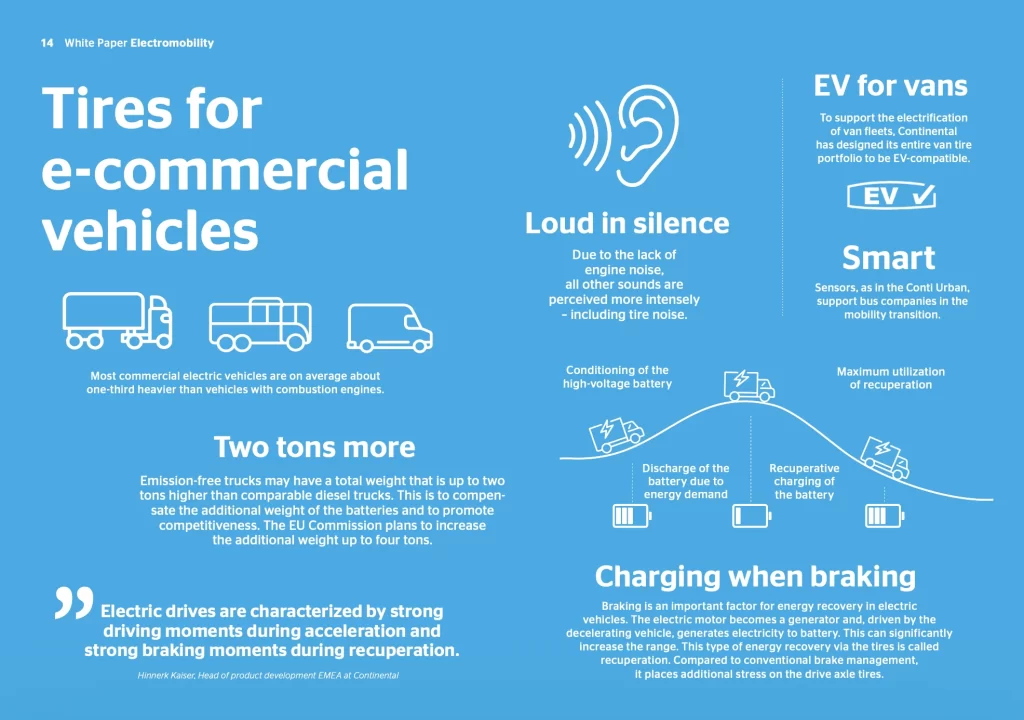
The total weight of electric trucks and buses is significantly higher due to their battery packs. This means that tires with a higher load index are required in certain configurations. A higher load index increases the load capacity of the tires so that no compromises have to be made in terms of payload. In addition, electric drive systems generate much less noise, which means tires with improved noise characteristics play an important role in further optimizing driving comfort.
Tire development
Relevant criteria
In terms of tires, the same criteria apply for an efficient electric vehicle as for a combustion-engine vehicle. Lower energy consumption is sustainable, regardless of the drive system. An electric vehicle is particularly sustainable if it covers a greater distance with less electricity consumption.
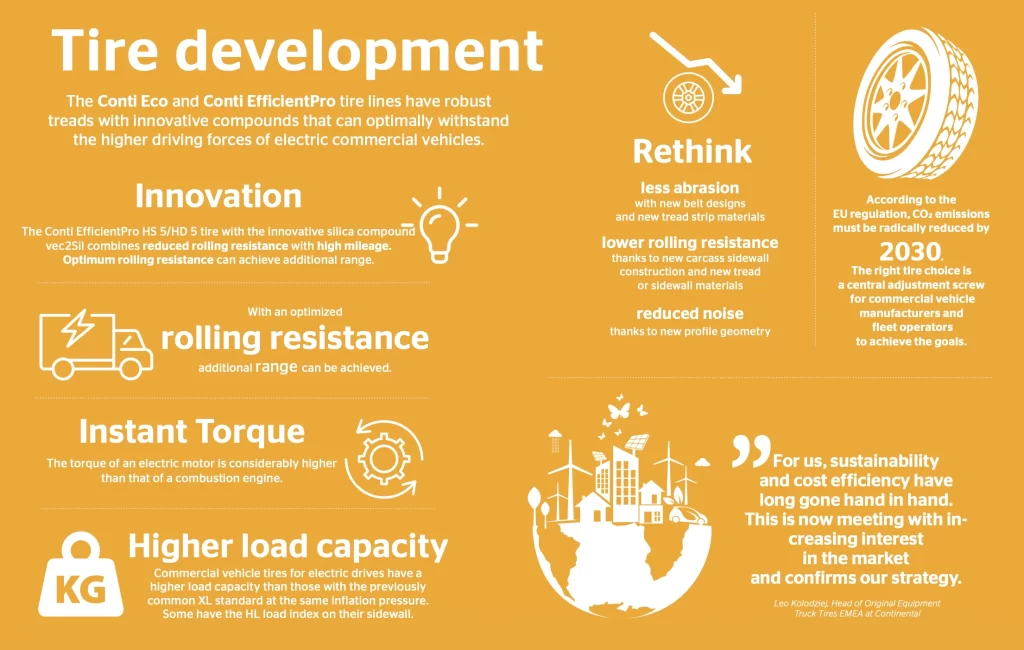
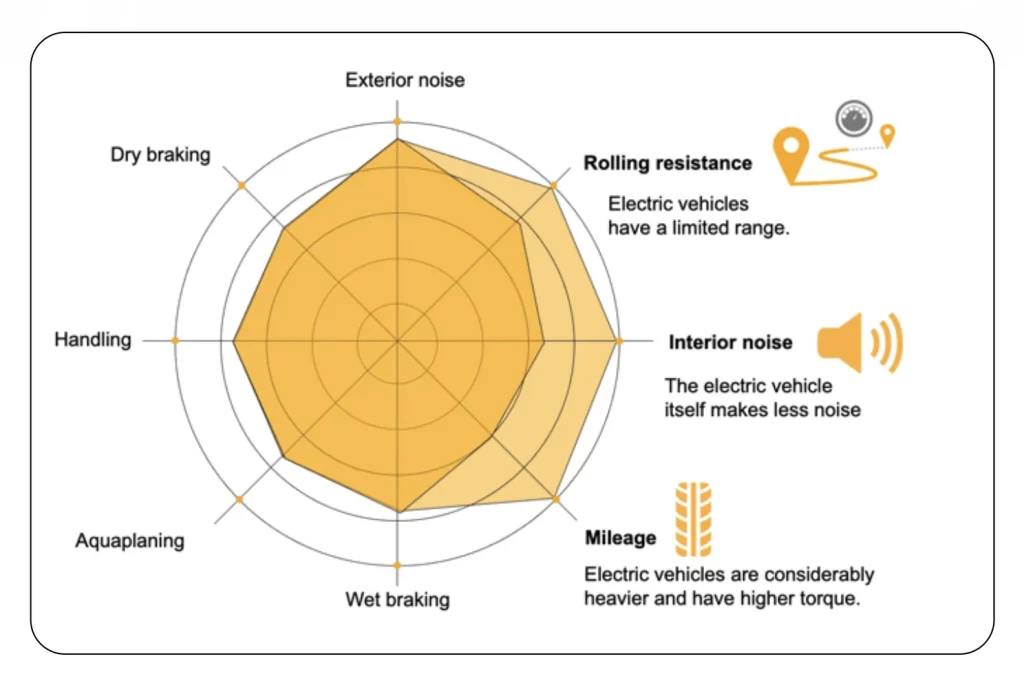
Quiet rolling noise For more than ten years, Continental has been optimizing tires to achieve ever lower rolling resistance, high mileage and low rolling noise. This is because electric vehicles have no engine noise, which makes other noise sources in the vehicle appear more noticeable. It is therefore important that the tires generate a particularly low interior noise.
Optimized rolling resistance A vehicle’s energy consumption can be reduced by minimizing its rolling resistance. This contributes to fuel consumption and CO2 emissions by up to 30 percent.
Higher load capacity Electric vehicles need tires that are designed for the higher load due to the additional weight of batteries. With tires such as the Conti EfficientPro HS 5/HD 5, Continental offers products that guarantee high stability, endurance and safety with an increased load index and reinforced belt layers. The higher load index of the tires ensures that there is no need to compromise on payload.
Full torque One of the special features of electric drive is the torque. The torque of an electric motor, and thus its acceleration from a standstill, is considerably higher than that of a combustion engine. When pulling away, the tires must transfer the full torque to the road in a matter of seconds – this is known as instant torque. This puts a greater strain on the tires and can lead to increased wear.
Battery weight Most electric commercial vehicles are on average around a third heavier than their combustion-powered equivalents. An empty Mercedes-Benz eActros 600 weighs around 3.5 to 4 tons more than a combustion-powered vehicle. The largest batteries currently available weigh 1,500 kilograms. A 40-tonne vehicle like the Mercedes-Benz eActros 600 is equipped with three such batteries (Source: ADAC).
New priorities
E-mobility has changed the focus of tire development. The challenge is to combine tire properties with high safety aspects, handling, comfort and other requirements. In view of the Europe-wide development towards e-mobility, the demand for suitable tires is increasing.
Electric vehicles are heavier than combustion-powered ones, so the tires must be able to withstand higher loads. In order to increase load capacity while also meeting customer requirements, various changes are needed in the tire structure and the tire compound. To reduce abrasion, tire developers are working on belt constructions for the components and are developing new tread materials. The rolling resistance can be influenced by the carcass sidewall construction and by new tread or sidewall materials. The profile geometry is modified to optimize the tire’s noise performance.
The conflicting goals These are conflicting goals that must be resolved at a very high level. To do this, Continental’s tire developers have reinforced the bead and given the tire an improved contour that reduces rolling noise. The tread compound has also been optimized. This makes it possible to achieve low rolling resistance, ensure precise handling and maintain the usual high level of mileage. The higher weight is compensated for by a stronger carcass construction. Most tires have the XL symbol on the sidewall for this. However, this does not mean that every electric vehicle needs a tire with an XL designation; this is only necessary depending on the weight of the vehicle.
Innovative mixing technology
With the Conti EfficientPro HS 5/HD 5 tire, Continental offers a tire for the commercial vehicle segment that is ideally suited for electrically powered commercial vehicles. The innovative silica compound vec2Sil was developed to optimize fuel and energy efficiency in long-distance transport and to reduce CO2 emissions.
The new vec2Sil technology and an optimized tread pattern combine reduced rolling resistance with high mileage. “With the Conti EfficientPro HS 5/HD 5, we are helping our customers to meet strict CO2 reduction targets, reduce their operating costs, including toll costs, and preparing for a future driven by electric,” says Hinnerk Kaiser, head of Product Development EMEA at Continental.
No compromise on payload With specially reinforced belt layers, the tire ensures high stability, endurance and safety – even with heavy loads. “The tire offers excellent wet grip and safe handling throughout its entire service life.” A higher load index increases the load capacity of the tires, which means that there is no need to compromise on the payload of electrically powered commercial vehicles. “In addition, an innovative tread pattern with void-forming grooves ensures consistently good handling and braking performance, even on wet or snow-covered roads.” High grip and stability offer safety in all weather conditions. In addition, the strong carcass ensures optimal retreadability.
Focus on sustainability The Conti EfficientPro 5 is ideal for electric commercial vehicles. “It is the first tire in this segment in which we have specifically taken into account the requirements of electric vehicles,” reports Hinnerk Kaiser. “The new Conti EfficientPro HS 5/HD 5 is ideal for fleet managers who prioritize both efficiency and safety. This tire represents a significant advancement for fleets that are already committed to electric mobility and sustainability.”
Focus durability
Electric vehicles are heavier due to battery weight. This means that tires for EVs are designed and engineered for the higher load capacity.
Electric vehicle tires carry a heavier load. This can lead to increased tire wear. Therefore, a stronger sidewall and more robust rubber compounds are used.
In addition to good grip and low rolling resistance, the rubber compound must also offer maximum robustness. Tire manufacturers like Continental aim to reduce vehicle energy consumption while offering products that are sustainable overall throughout their entire life cycle. This commitment goes beyond investing in sustainable raw materials and production processes – it also involves minimizing rolling resistance and enhancing tire durability. As a result, good durability and low tire wear are key priorities. Continental’s tire developers recognized early on that durability and rolling resistance are important parameters. That is why the product portfolio is designed for efficient operation of all vehicles – regardless of the drive type.
Focus on rolling resistance
With the fifth generation of its Conti Eco tire line for freight transport, Continental is consistently focusing on the needs of customers in the transport sector and making a significant contribution to greater sustainability.
According to a study by Boston Consulting on behalf of the European Association of Automotive Suppliers (CLEPA), total cost of ownership (TCO) is still the top priority, but sustainability factors have also become important purchasing criteria. With the Conti Eco tire line, freight companies in regional and long-distance transport can significantly reduce fuel consumption, CO2 emissions and costs.
Balancing conflicting goals “With the new generation of Conti Eco, our developers have succeeded in balancing the conflicting goals of optimized rolling resistance and high mileage,” says Hinnerk Kaiser, Head of Product Development EMEA at Continental. A fleet of 100 vehicles equipped with the new Conti Eco and driving around 80,000 kilometers a year in regional transport can save up to 69,000 euros operating costs and 120 tons of CO2 compared to the previous model.
Rolling resistance and mileage This is made possible by optimized rolling resistance and high mileage. “In the past, when a tire rolled particularly easily and as a result required less driving energy, this could be at the expense of robustness and service life,” explains Kaiser. In the development of the Conti Eco Gen 5, the focus was on measures to improve rolling resistance without affecting mileage – in the casing construction, on the treads, and in the design of the overall contour and profile. The cap-base two-layer tread design with innovative compounds results in high mileage and great robustness while simultaneously optimizing rolling resistance. The road contact compound (cap) makes it possible to focus on mileage and robustness.
Rolling resistance and sustainability Optimized rolling resistance and high mileage have a positive impact on the ecological footprint. “If our product increases a vehicle’s fuel efficiency and lasts longer, it reduces CO2 emissions.” This makes the right tire choice even more important, especially with regard to the emission-based EU toll component.
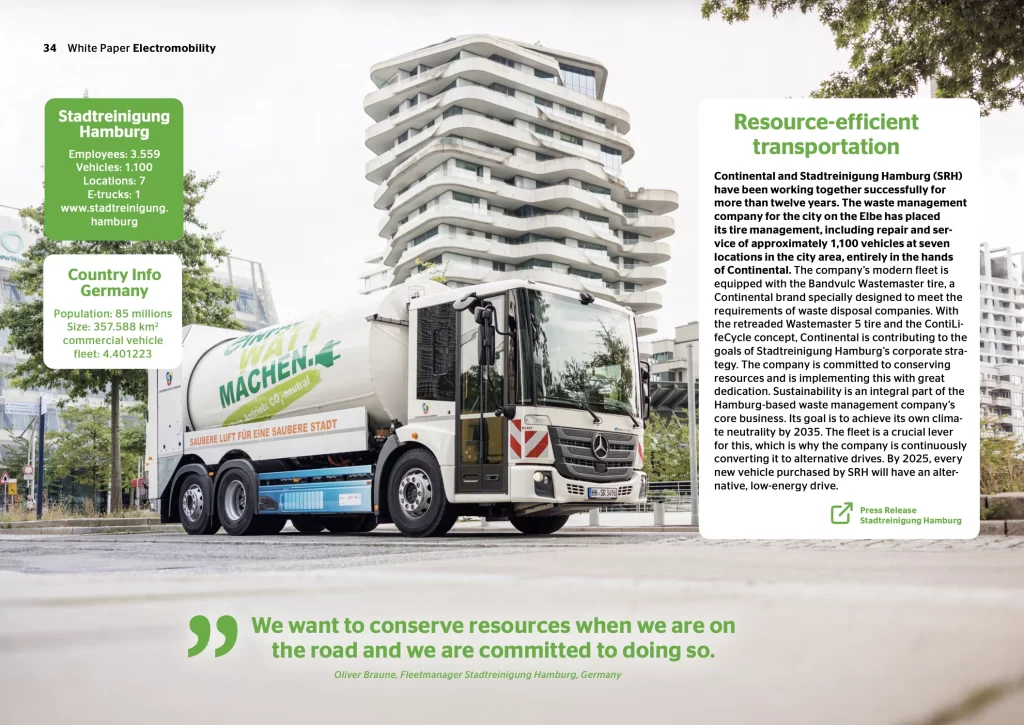
Adjusting for additional torque The new Conti Eco HD 5 for the drive axle has been purposely designed for the higher torque of battery electric vehicles. Its pattern design with many gripping edges allows for greater traction during acceleration and deceleration.
Remote monitoring with sensors
To support optimal driving dynamics and handling in electric vehicles, tires equipped with sensors are increasingly being integrated into the vehicle architecture for connected and automated driving.
Information generated by tire sensors, such as inflation pressure, temperature, wheel load, tread depth, wheel speeds, slip conditions and damage to the tire structure, will in future contribute to improved driving characteristics and increased road safety in autonomous communication.
Remote tire monitoring: Continental offers digital tire monitoring as part of its comprehensive tire management service Conti360° Solutions. ContiConnect sensors inside the tire continuously measure inflation pressure, temperature and mileage.
React in good time In the event of deviations in the values, the system issues a proactive warning so that the fleet operator can react in good time. The individual modules ContiConnect Live, ContiConnect Trailer, ContiConnect Yard and ContiConnect Pressure Check modules can be individually selected to meet the fleet’s requirements. User-friendly interfaces provide a comprehensive overview of the fleet’s tire condition in a clear portal, an on-site app, a driver app and a third-party system.
Driving change
Leo Kolodziej, Head of the Original Equipment Business for Truck Tires EMEA at Continental, explains why, after decades of optimizing mileage, the focus of tire development has shifted more towards optimizing rolling resistance in recent years.
For original equipment manufacturers, it is firstly key that the tires can support higher vehicle weights. However, rolling resistance is even more important. It has the greatest influence on the range of the vehicles, which is particularly relevant in view of the current charging infrastructure. The range and energy consumption of the vehicles have a direct impact on the total cost of ownership (TCO). Optimal rolling resistance – without compromising on safety and mileage – contributes significantly to reducing energy consumption and thus CO2 emissions. The transition to electric vehicles is also increasing OEMs’ desire to share ideas and conduct joint tire tests focusing on tire and vehicle noise. In addition, the issue of abrasion is becoming increasingly important because recuperation in electric vehicles increases tire wear.
It’s a real paradigm shift. After decades of optimizing mileage, we have been focusing more on optimizing rolling resistance for several years now. This is demonstrated by our Conti Eco Gen 5 and Conti EfficientPro HS 5/ HD 5 tires. With the Conti Eco Gen 5 for regional and long-distance transport, we have succeeded in balancing the conflicting goals of optimized rolling resistance and high mileage. Freight forwarding companies save on fuel consumption, reduce CO2 emissions and therefore lower costs. The Conti EfficientPro HS 5 tire ensures high stability, endurance and safety with an increased load index and reinforced belt layers. This tire is a milestone for fleets that are already committed to electric mobility and sustainability. The Conti EfficientPro HS 5/ HD 5 is the first tire in this segment where we specifically factored in the requirements of electric vehicles.
The most obvious factor is tire pressure, which is being monitored by TPMS tech – now mandatory in new vehicles. Optimal tire pressure enhances safety, mileage and the effect of rolling resistance, and therefore helps reduce CO2 emissions. Future TPMS systems will be more digital and automated, which means dynamically adjusting the tire pressure to the total vehicle load will become a possibility. Professional tire monitoring will continue to gain in importance overall, including with regard to autonomous trucks and the safety level required for them.
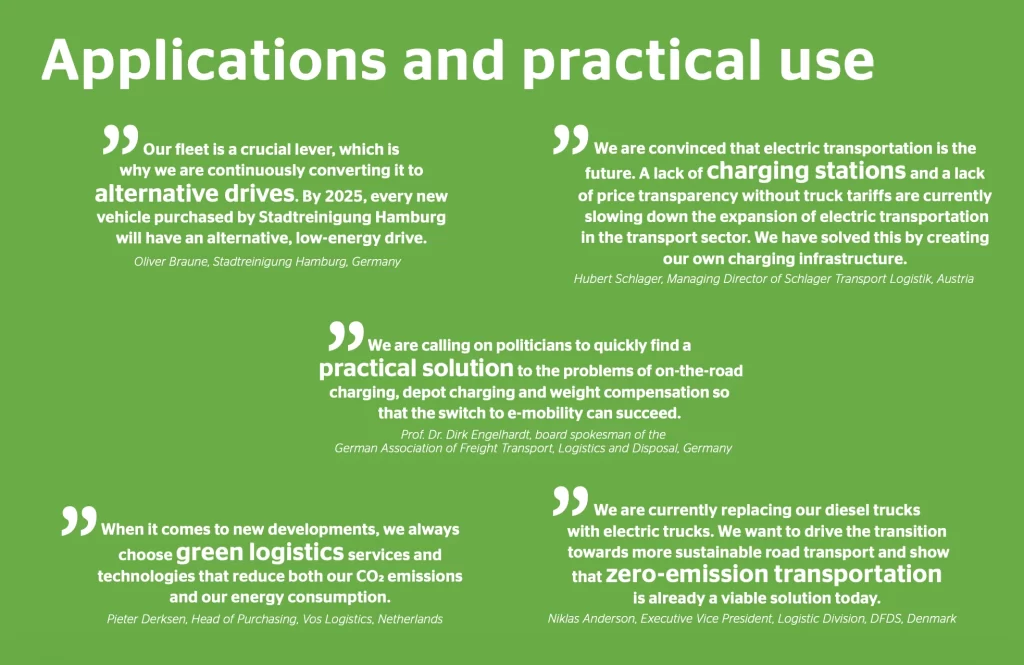
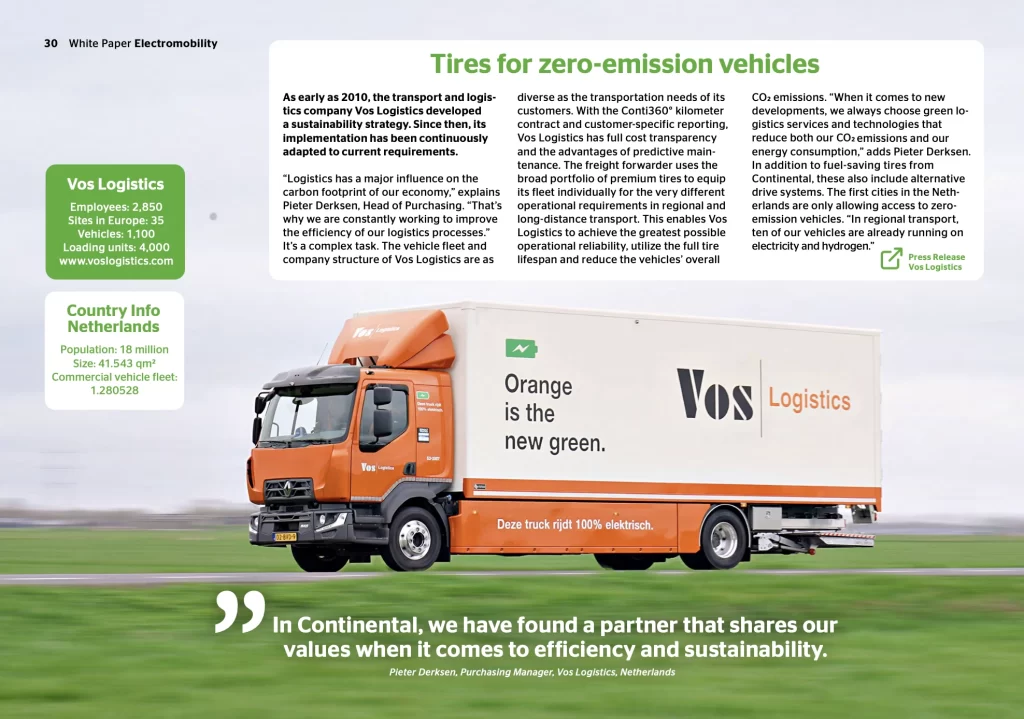
Applications and practical use

Continental

