

Sai Gon, 3 May 2026. Truck tires are a major recurring cost, yet operators often delay regular rotation. Proper rotation extends tread life and improves fuel efficiency for both rigid trucks and tractor trailers.
Tires left in one position wear unevenly from steering, braking, axle load, and road impact. This can reduce handling performance, create vibration, and lead to premature tire replacement.
Rotation improves wear balance, safety, and performance. The correct interval depends on vehicle type, load, and wear patterns—not every rigid truck or tractor trailer should follow the same schedule.
Mục lục
- 1 What Determines the Right Truck Tire Rotation Interval?
- 2 Choosing a Tire Rotation Plan by Fleet Size
- 3 How to Rotate Drive and Trailer Tires Based on Wear
- 4 Best Trailer Tire Rotation Strategy for Tandem and Tri-Axle Trailers
- 5 Final Notes for Better Tire Rotation Results
- 6 Final Thoughts on Truck Tire Rotation
What Determines the Right Truck Tire Rotation Interval?
There is no single truck tire rotation schedule for every vehicle. Rigid trucks and tractor trailers face different loads, routes, and axle stress, so tires wear at different rates.
While many maintenance programs list 6,000 to 15,000 miles as a general guideline, fixed mileage intervals are rarely practical for working fleets. In most operations, tires are rotated only when inspections show uneven wear, abnormal tread loss, or position-related wear patterns.
The most practical approach is monthly tire condition checks based on actual wear. Larger fleets can use tire management software to monitor wear trends and service timing, while smaller operators can perform quick checks with a tread depth gauge and pressure gauge. This helps reduce unnecessary rotations, catch tire issues early, and determine when rotation is truly needed.
Quick Monthly Tire Inspection Guide
Monthly inspections require two tools: a tread depth gauge and a record system. Use a digital tread depth gauge, available on Amazon and at most automotive stores.
Measure tread depth on each tire and record the reading by vehicle number and tire position. IMany operators use smartphone notes to record and track data. Attach photos to track wear patterns over time.
This simple routine helps spot abnormal wear early, reduce unnecessary rotations, and make better tire maintenance decisions based on measurable wear data.
How to Check & Record Data by Tire Position
Start at the left front steer tire and mark it as 1L, then move clockwise around the truck and trailer using the same sequence every time. A consistent inspection route helps prevent missed positions and makes monthly records easier to compare.
At each tire, use a digital tread depth gauge to measure the inner, center, and outer tread grooves. Record the readings in that order, along with the tire brand and tread pattern, since this helps confirm whether the tire is designed for a steer, drive, or trailer position.
If you notice unusual wear patterns or one tire wearing faster than the rest, take a quick photo and add a short note. Logged data helps determine rotation timing, pairing, and emerging tire risks.
Regular inspections also catch hidden tire damage early—bulges, cuts, punctures, and casing stress—before they become roadside failures.
Choosing a Tire Rotation Plan by Fleet Size
| Fleet Size | Best Rotation Method | Why It Works |
| 1–10 Vehicles | Monthly Manual Checks | Low cost and easy to manage |
| 10–50 Vehicles | Mileage + Monthly Checks | Good balance of time and control |
| 50+ Vehicles | Tire Management Software | Best for scale and data tracking |
There is no single tire rotation system that fits every operation. The right method depends on fleet size, available labor, maintenance discipline, and how closely you track tire cost per mile. For smaller operators, monthly manual inspections often provide the best balance of cost and control. Busy owner-operators may prefer a simple mileage trigger. Larger fleets usually gain better consistency and lower long-term tire costs through tire management software.
Monthly Manual Checks for Small Fleets
For small fleets or independent operators, monthly manual inspections are often the most practical option. You only need a digital tread depth gauge, pressure gauge, and a simple record system such as a notebook or phone notes app.
Measure tread depth by tire position, record air pressure, and note unusual wear such as shoulder wear, feathering, irregular tread loss, cuts, or bulges. Many operators also attach photos each month to compare changes over time.
This method helps identify when tire rotation is truly needed, catch tire problems early, and avoid rotating tires too soon or too late.
Simple Mileage Rotation Rule for Busy Operators
If regular inspections are difficult to maintain, a simple backup method is to rotate steer tires at the halfway point of their expected service life. It is less precise than tread-based inspections, but practical for operators with limited time.
Example: 80,000-mile steer tires → rotate at 40,000 miles to correct shoulder wear.
When the tires reach the end of normal steer axle service, replace them with new steer tires and move the removed tires to a suitable drive or trailer position if casing condition and tread depth still allow.
The drawback is that without monthly checks, some tires may need removal earlier due to alignment issues, pressure loss, or irregular wear before reaching the planned mileage.
Tire Management Software for Larger Fleets
For fleets with a larger number of vehicles, software is often the most efficient option. Once tire volume grows, manual tracking becomes slower, less accurate, and harder to standardize across technicians or locations.
Modern tire management systems can monitor air pressure, tread depth, tire age, wear trends, average tire life, regroove timing, casing history, repair records, retread cycles, and problem wheel positions across the fleet. Some systems also flag units with chronic pressure loss or abnormal wear patterns.
For larger operations, software-driven tire management often reduces downtime, improves casing value, extends tire life, and helps managers make better rotation, regroove, retread, and replacement decisions using real performance data instead of guesswork.
How to Rotate Drive and Trailer Tires Based on Wear
Earlier, we looked at a steer tire example where outer shoulder wear signaled it was time to flip or swap the tires. Drive tires follow the same wear-based logic—but the wear patterns are different, so the rotation plan must be different too.
Drive tires take the hardest workload: torque, heavy axle loads, and constant scrub in turns. That often leads to center wear, heel-and-toe lug wear, axle-to-axle differences, and outer shoulder scrub on outside duals in ports, yard work, slow routes, or frequent tight turns.
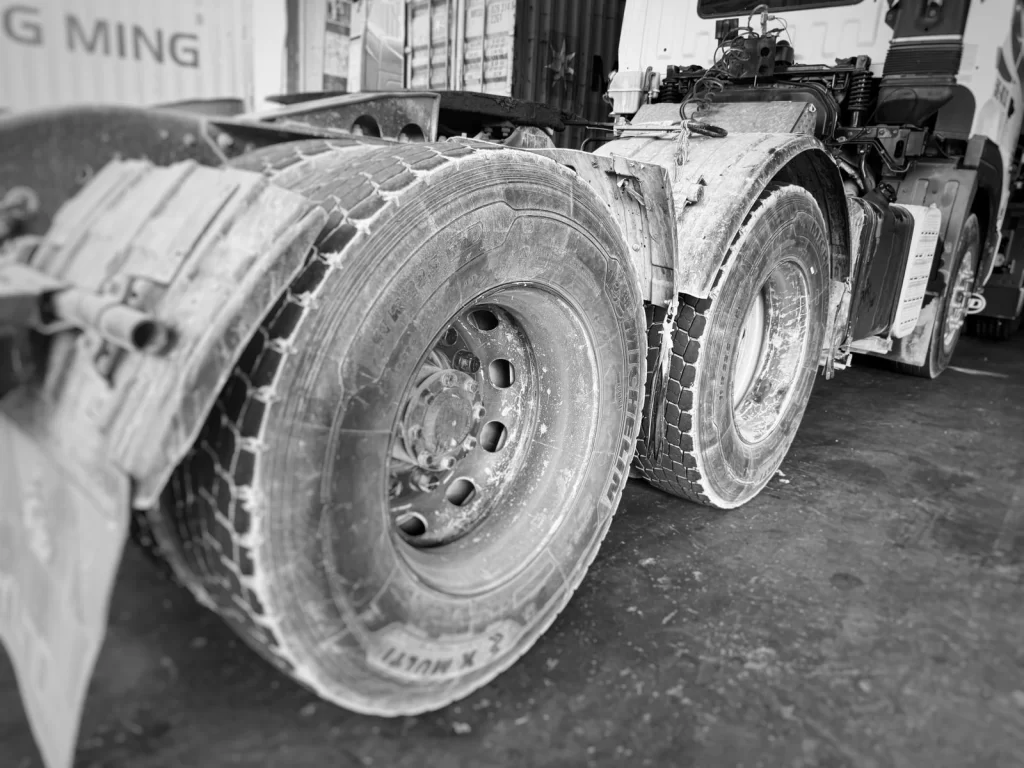
For this reason, drive tire rotation should be based on tread differences and wear patterns, not mileage alone. The goal is to balance wear, extend traction life, and maximize casing value before retread or replacement.
How to Correct Heel-and-Toe Wear on Drive Tires
Heel-and-toe wear is common on drive tires, especially on tandem axles, high-torque trucks, and stop-and-go routes. Two practical correction methods are commonly used depending on cost, labor, and tire condition.
Method 1: Flip the Tire on the Wheel
Flip the tire when heel-and-toe wear becomes measurable or causes vibration. Reversing the wear direction restores tread balance and reduces shoulder bias.
Benefits: Stronger wear correction, better shoulder balancing, and longer usable tread life.
Drawbacks: Requires removing the tire and remounting it on the wheel, which adds labor, downtime, and service cost.
Method 2: Swap Inner and Outer Dual Positions
A faster, lower-cost option is to swap the dual tires at the same wheel position, such as 2LI to 2LO. This changes the tire’s working position and can help reduce irregular wear without removing the tire from the wheel.
Benefits: Faster service, lower labor cost, and less downtime than full flipping.
Drawbacks: Wear correction is usually slower and less aggressive than flipping.
Important Tire Design Check
Before using either method, inspect the tire sidewall for directional arrows, inside/outside markings, or shoulder-position guidance. Some drive tires use directional tread designs for fuel efficiency, traction, or balance. On those tires, reversing direction is often best delayed until at least 50% of usable tread is worn.
These methods work best for fleets that inspect tires regularly and rotate based on actual wear. If monthly inspections are not practical, the simplified schedule below can still help control uneven wear.
Simplified Rotation Schedule Without Monthly Inspections
Use tread-life milestones as rotation triggers:
Step 1: After 50% of usable tread is worn
Swap tires between the forward and rear drive axles (Axle 2 and Axle 3) to even out axle wear. If shoulder scrub is present, combine the move with Method 1.
Step 2: After 80% of usable tread is worn
Move inside dual tires to the outside positions, if casing condition allows, to reduce late-stage shoulder wear. Use tire flipping only if irregular shoulder wear remains.
This simplified method favors speed and convenience over precision, but it can still improve tire life when regular inspections are not practical.
Best Trailer Tire Rotation Strategy for Tandem and Tri-Axle Trailers
The first question is simple: What trailer setup are you running—C4.C4 tandem or C4.C4.C4 tri-axle? The next question matters just as much: Do you replace tires in matched pairs, or replace most of the trailer set together?
Rotation strategy follows axle layout and replacement policy. Operators who replace tires in pairs usually rotate earlier and more frequently to keep tread depths balanced. Operators who service the trailer as a full set often focus on even wear and timing removals together.
Trailer tire rotation should follow your axle layout and replacement strategy—not a one-size-fits-all mileage number.
How to Rotate Tires on Tandem Trailers
Trailer tires follow the same midlife rule. When tread reaches about 50% of usable wear, rotate tires between the faster-wearing axle and the slower-wearing axle to even out tire life. If shoulder scrub is present, flip the tire on the wheel so the less-worn shoulder moves into the working position.
This method is especially effective on tandem trailers. In many two-axle setups, front trailer axle tires may last only about 80% as long as tires on the rear axle because the front axle usually sees more turning scrub and drag.
If shoulder wear or scrub is visible, flipping the tire on the wheel can still be an effective correction method to rebalance shoulder wear and extend usable tire life.
How to Rotate Tires on Tri-Axle Trailers
Tri-axle trailers usually show less balanced wear because three axles must scrub through the same turning path. In many operations, tires on Axle 1 may deliver only about 75% of the mileage seen on the center axle, while Axle 3 may see only about 60% of the life of Axle 2, which often becomes the longest-wearing position.
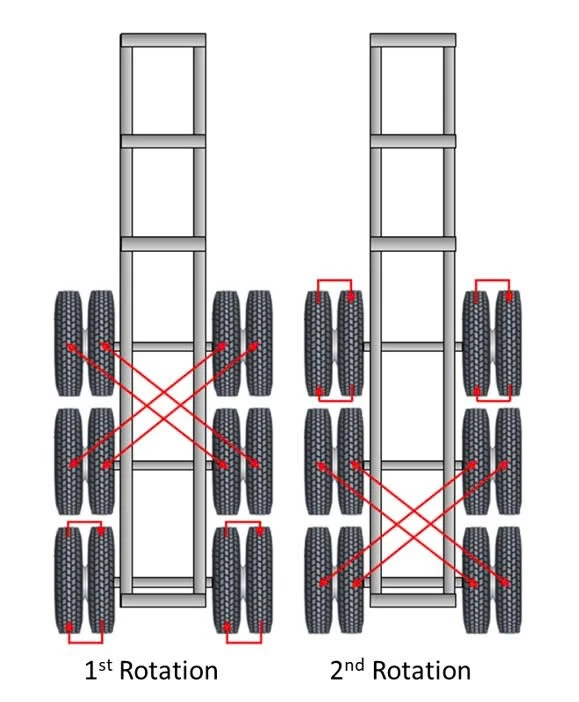
Because of that imbalance, a simple 50% tread rotation trigger is often no longer effective on tri-axle trailers. Rotation decisions should be based on actual tread measurements between Axle 1, Axle 2, and Axle 3 rather than a single mileage milestone.
Final Notes for Better Tire Rotation Results
Rotation works best with properly matched tires. On dual-wheel positions, tread depth difference between the two tires should generally stay within 5/32 inch (about 4 mm), while the difference between the left and right dual assemblies on the same axle should stay within 9/32 inch (about 7 mm). Larger gaps can increase irregular wear and load imbalance.
At major rotation points such as 30% or 50% tread wear, measuring tire circumference can also help. Matching circumference and pressure improves load sharing and reduces wear.

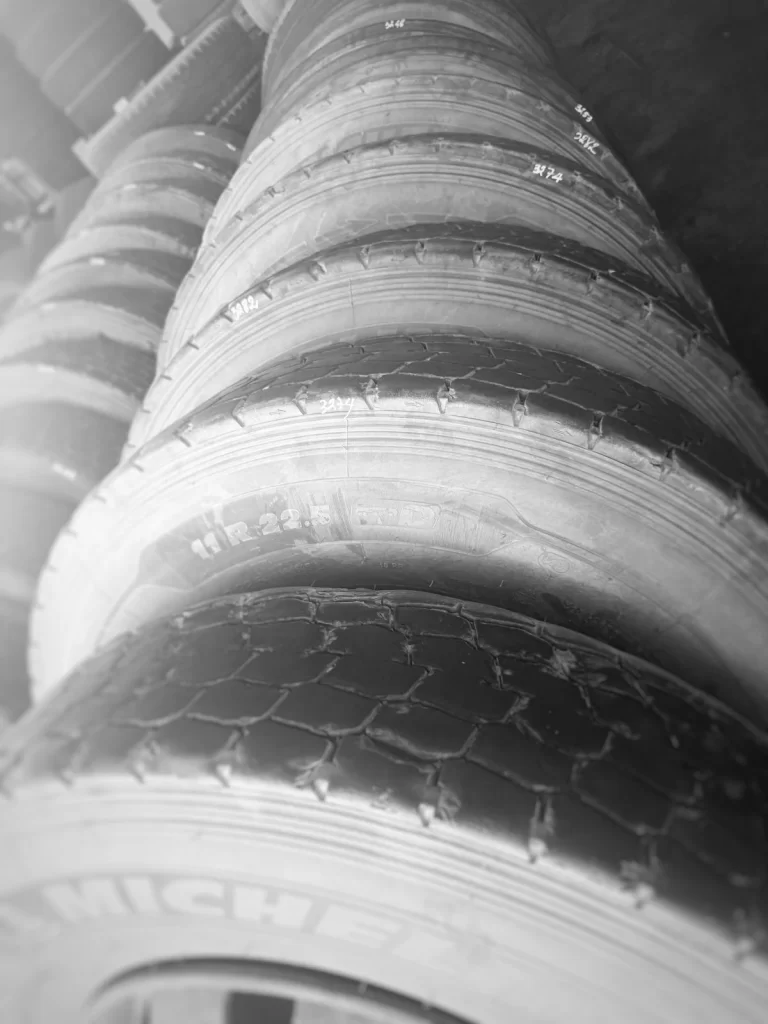
For dual-wheel fleets, using a dual-tire pressure equalization system can help paired tires maintain the same operating pressure. Systems such as Crossfire are commonly used for this purpose and may support more even wear by reducing pressure mismatch between dual tires.
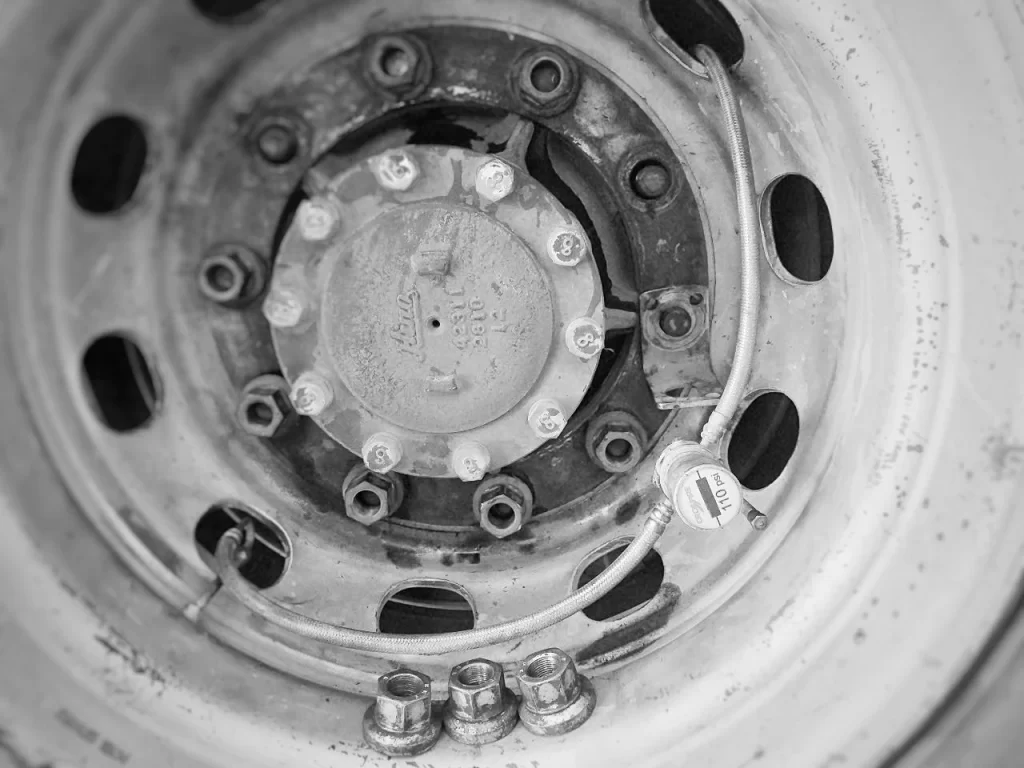
Proper tire rotation helps keep tread wear even, which preserves casing condition and creates a more uniform tread surface for safer and more effective regrooving truck tires later in the tire’s service life.
Whether you use monthly manual checks or tire management software, better tread data, pressure control, and tire matching decisions often lead to better rotation results and longer tire life.
Final Thoughts on Truck Tire Rotation
There is no fixed mileage number for truck tire rotation. The right timing depends on route type, load weight, tread design, tire position, and mechanical conditions such as alignment, suspension wear, or pressure control.
The most valuable habit is a monthly tire inspection. Regular tread and pressure checks catch problems early, improve rotation timing, reduce tire cost, and often improve fuel economy.
Drivers and fleet managers know their vehicles best. Consistent habits lead to longer tire life, lower cost per mile, fewer breakdowns, and more profitable trucks.
FAQ
There is no universal mileage number. Truck tire rotation depends on axle position, route type, load weight, tread design, and wear pattern. For most fleets, monthly inspections and tread measurements deliver better results than following a generic mileage schedule.
es—when done correctly. Proper rotation can extend tire life by up to 20% by keeping wear even, preventing premature removal, and protecting casing value for replacement or retread. Results are best when tire pressure is properly maintained and alignment is kept in spec.
Tread wear is usually the best trigger. On the same vehicle, each tire position and tread pattern can wear at different rates from steering forces, axle load, scrub, and road conditions. Mileage is the same for the truck, but tire life is not. Rotate by measured tread wear—not the odometer alone.
Monthly tire inspections provide the data needed to make smart rotation decisions. Uneven tread wear, shoulder wear, heel-and-toe wear, vibration, pull, or one axle wearing faster are common signs that rotation may be needed.
Yes. Proper tire rotation helps tires wear evenly and stay in service longer. It also helps optimize tire life after tread passes 50%, when rolling resistance may be up to 20% lower than when new, helping improve fuel efficiency.
Nhat Diem Honq
