

Sài Gòn, ngày 29 tháng 3 năm 2026
Tại sao giá luôn là yếu tố đầu tiên mà tài xế xe tải quan tâm?
Bởi vì đó là yếu tố dễ nhìn thấy, đơn giản và dễ so sánh.
Trong một thị trường đầy biến động, giá trở thành tín hiệu nhanh nhất và dễ tiếp cận nhất — cho phép các đội xe đưa ra quyết định nhanh chóng giữa nhiều nhà cung cấp. Nhưng những gì dễ so sánh chưa chắc phản ánh đúng chi phí thực tế.
Đây chính là lý do vì sao lốp xe tải giá rẻ thường lại trở nên đắt hơn theo thời gian.
Giá chỉ phản ánh chi phí ban đầu. Những yếu tố phía sau — tuổi thọ lốp, dạng mòn, mức tiêu hao nhiên liệu và tổng chi phí vận hành — phức tạp hơn nhiều và khó quan sát hơn. Khi thiếu dữ liệu rõ ràng về các yếu tố này, giá tự nhiên trở thành tiêu chí mặc định trong cạnh tranh.
Theo thời gian, điều này định hình cách thị trường lốp xe tải vận hành: khi người mua tập trung vào giá, nhà cung cấp sẽ cạnh tranh bằng giá.
Trên thực tế, phần lớn các đội xe không lựa chọn lốp dựa trên hiệu suất ngay từ đầu. Họ bắt đầu bằng một mức giá chấp nhận được, sau đó dựa vào kinh nghiệm — chọn lốp, vận hành và đánh giá kết quả.
Điều tưởng như là quyết định thực chất lại là một vòng lặp thử và sai. Một dòng lốp giá rẻ có thể “đủ dùng”, và đôi khi điều đó là đủ để chấp nhận. Nhưng khi không đạt, phản ứng rất đơn giản: thay và thử lại.
Khi mô hình này lặp lại, quyết định dần được định hình bởi trải nghiệm quá khứ thay vì dữ liệu đo lường.
Và trong quá trình đó, chi phí lốp không được quản lý chủ động — mà bị chi phối bởi ngẫu nhiên, thay vì hệ thống.
Mục lục
Thị trường được định hình bởi hành vi, không phải bởi giá
Thị trường lốp xe tải không đơn thuần bị dẫn dắt bởi nhà cung cấp hay chiến lược giá — mà được định hình bởi hành vi mua. Và hành vi này chịu ảnh hưởng mạnh từ áp lực kinh tế và thực tế vận hành.
Sau giai đoạn Covid, các đội xe trở nên nhạy cảm hơn với chi phí. Những bất ổn kéo dài — từ suy giảm kinh tế đến rủi ro địa chính trị — tiếp tục củng cố tư duy ngắn hạn, nơi giá đầu vào trở thành bộ lọc chính trong quyết định.
Nhưng bên dưới đó là một vấn đề mang tính cấu trúc. Hoạt động bảo dưỡng và quản lý lốp tại nhiều đội xe vẫn mang tính phản ứng. Vấn đề chỉ được xử lý sau khi xảy ra sự cố, và trong nhiều trường hợp, không được giải quyết triệt để hoặc có hệ thống.
Hệ sinh thái hỗ trợ bảo dưỡng phòng ngừa — bao gồm chương trình dịch vụ chuẩn hóa, hướng dẫn kỹ thuật và năng lực đại lý — vẫn còn phân mảnh và thiếu đồng nhất. Khi thiếu hệ thống hỗ trợ mạnh, đội xe buộc phải dựa vào kinh nghiệm thay vì dữ liệu.
Kết quả là, quyết định quay về yếu tố dễ thấy nhất: giá. Theo thời gian, điều này củng cố một thị trường nơi giá trở thành tiêu chuẩn chính — dù không phản ánh đúng chi phí vận hành thực tế của lốp.
Ở góc độ này, thị trường không được tối ưu — mà đang thích nghi. Và chi phí lốp không được quản lý chủ động, mà bị chi phối bởi thử nghiệm, sai lệch và hoàn cảnh.
Nhu cầu vận tải tại Việt Nam đang định hình thiết kế lốp tại Trung Quốc
Ngày nay, thiết kế lốp xe tải không còn chỉ do nhà sản xuất quyết định — mà bị chi phối trực tiếp bởi cách đội xe vận hành thực tế.
Tại Việt Nam, đặc biệt quanh các khu công nghiệp, mô hình vận tải đã thay đổi rõ rệt. Tuyến đường ngắn hơn, chu kỳ giao hàng linh hoạt hơn, và áp lực không còn nằm ở tốc độ — mà là hiệu quả chi phí.
Các đội xe đang chịu áp lực giảm chi phí trên mỗi chuyến. Điều này tạo ra một nhu cầu rõ ràng: lốp có khả năng tải cao hơn với chi phí đầu vào thấp hơn, giúp tối đa tải trọng và giảm số chuyến.
Nhu cầu này lan ngược lên chuỗi cung ứng. Nhà nhập khẩu và phân phối bắt đầu ưu tiên các sản phẩm đáp ứng tiêu chí này, từ đó thúc đẩy nhà sản xuất — đặc biệt tại Trung Quốc — điều chỉnh thiết kế.
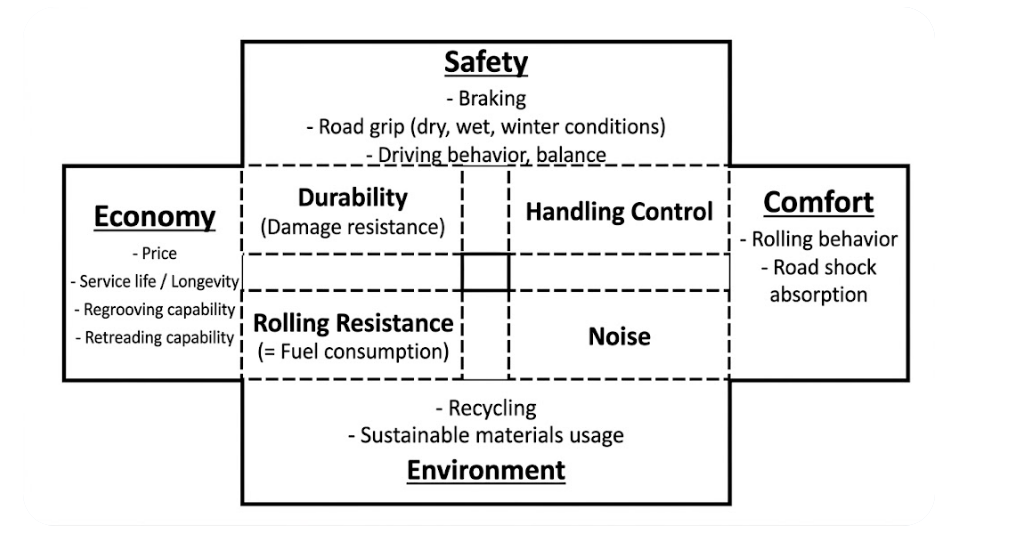
Kết quả là, các đặc tính như tải trọng cao và độ mòn tốt trở thành điểm bán chính. Nhưng điều này đi kèm với đánh đổi.
Độ bám đường, hiệu quả nhiên liệu, độ êm ái và độ ổn định vận hành có thể bị giảm ưu tiên — vì khó đo lường và ít được chú ý trong quyết định ngắn hạn.
Theo thời gian, điều này tạo thành một vòng lặp: nhu cầu thị trường định hình sản phẩm, và sản phẩm lại củng cố hành vi mua.
Ở góc độ này, lốp xe tải không chỉ là sản phẩm kỹ thuật — mà là kết quả trực tiếp của cách thị trường vận hành.
How to Measure Real Truck Tire Cost
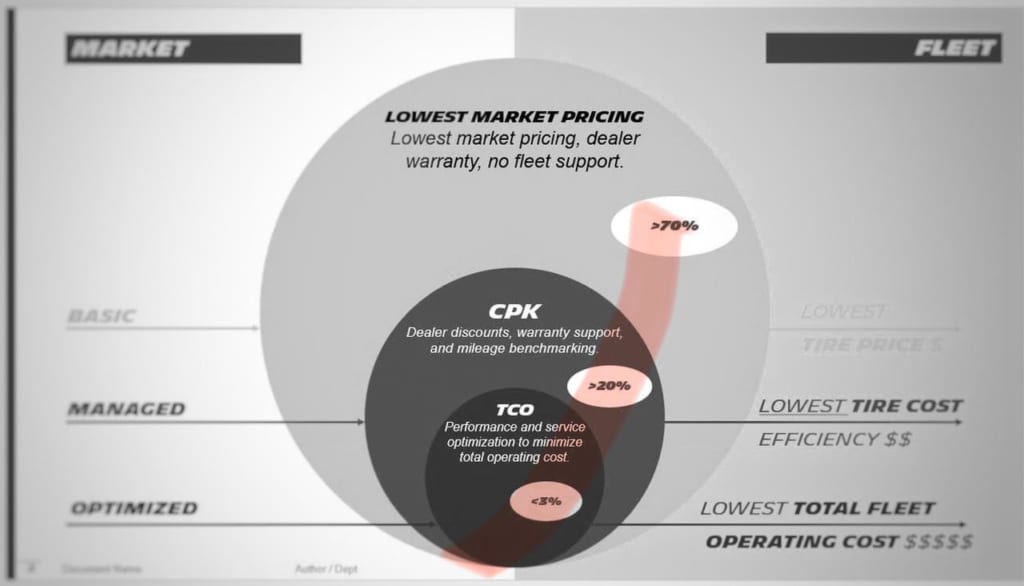
Cost Per Kilometer (CPK): The Simplest Way to Measure Tire Cost
If price does not reflect real tire cost, then how should it be measured?
Cost Per Kilometer (CPK) is one of the simplest ways to understand tire performance. Instead of focusing on how much a tire costs upfront, it looks at how much value the tire delivers over distance.
In theory, this is straightforward. Drivers only need to record the mileage when a tire is installed and track how many kilometers it runs before replacement.
But in reality, this step is often skipped. Most drivers do not track exact mileage. Instead, decisions are based on perception — how long the tire seemed to last, or how much time passed between replacements.
When distance is not measured, performance cannot be compared. And without comparison, cost cannot be evaluated accurately.
This is why, even though CPK is simple, it is rarely applied consistently in practice. And when measurement is missing, decisions naturally fall back to price — not because it is the most accurate metric, but because it is the only one available.
In the end, understanding tire cost comes down to a simple idea:
At this level, if mechanical issues or wheel alignment problems cause a tire to be removed early, the responsibility is often placed on the tire itself — rather than the system affecting its performance.
Total Cost of Ownership (TCO): The Cost You Don’t See at Purchase
Total Cost of Ownership (TCO): The Cost You Don’t See at Purchase
Cost Per Kilometer (CPK) helps measure tire performance over distance.
But it still looks at the tire in isolation.
Total Cost of Ownership (TCO) goes further. It considers how a tire affects the entire vehicle — including fuel consumption, maintenance, downtime, and driving safety.
One of the most critical factors within TCO is rolling resistance (RR).
Lower rolling resistance means the tire requires less energy to move, directly reducing fuel consumption over long distances. In a context where fuel prices have increased significantly — and are expected to remain volatile or elevated — this factor becomes even more important. For fleets operating thousands of kilometers each month, even a small difference in RR can translate into substantial and recurring cost savings.
However, not all tires are designed with this balance in mind.
In many markets, including Vietnam, demand often prioritizes higher load capacity and stronger wear resistance. As a result, tires are optimized to carry more weight and last longer in terms of tread life.
But this optimization comes with trade-offs.
Higher load-focused designs and harder compounds can increase rolling resistance, leading to higher fuel consumption over time. At the same time, these tires may generate more heat, transmit more vibration, and place additional stress on suspension and steering components.
This is where hidden costs begin to appear.
Increased vibration and reduced flexibility can accelerate wear on mechanical parts such as bushings, shock absorbers, and steering systems. What seems like a durable tire may, in reality, contribute to higher maintenance costs across the vehicle.
Driving feel also plays a critical role.
A tire that provides better grip, stability, and responsiveness improves vehicle control — especially under braking, cornering, or wet conditions. This directly impacts safety, reduces driver fatigue, and lowers the risk of irregular wear caused by poor handling.
In contrast, when these factors are overlooked, the cost is not immediately visible — but it accumulates over time through fuel, maintenance, and operational risk.
In that sense, TCO is not about buying a tire.
It is about understanding how that tire interacts with the entire system.
Who Is Responsible for Changing This — And What Should Be Done?
Drivers are not the problem.
They operate under real pressure — cost, time, and uncertainty. Choosing based on price is not wrong. It is the only logical decision when price is the only clear metric available.
The real problem is the system behind the decision.
When performance is not measured, when data is not visible, and when support is inconsistent, price becomes the default. Not because it is correct — but because it is the only thing that can be compared.
So responsibility does not sit with the driver.
It sits with those who shape the system.
For Tier 1 tire manufacturers and dealer networks, this is not just a business question — it is a responsibility to the market.
If the goal is to create real value, not just move volume, then the role must change.
From selling tires → to managing performance.
From reacting to failure → to preventing it.
From quoting price → to proving cost.
That means:
Making CPK measurable in real operations
Turning TCO into something fleets can actually see
Providing consistent, system-driven service — not experience-based fixes
Because without measurement, there is no control.
And without control, cost is left to chance.
In the end, the market will not change because drivers think differently.
It will change when they are given something better to measure.
And whoever provides that — will lead it.

